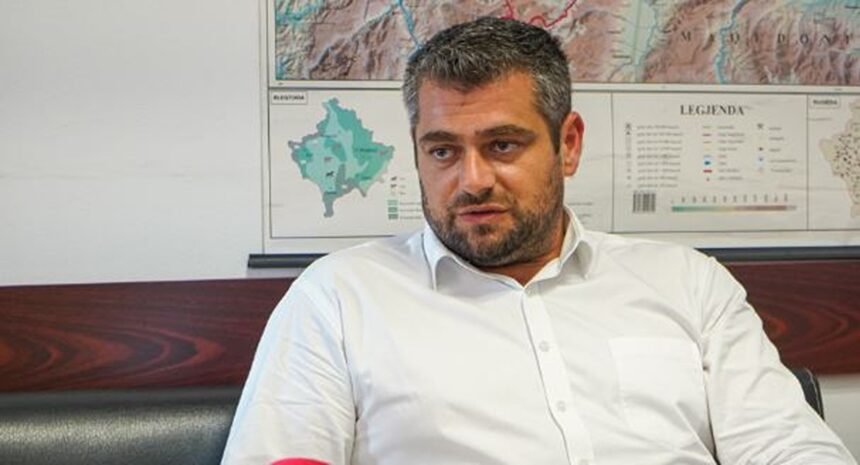
The Chair of the Governmental Commission on Missing Persons, Andin Hoti, told IndeksOnline that the year now coming to an end has been a difficult one for the issue of persons missing from the war in Kosovo, though it also brought important institutional and operational developments.
“The year we are concluding has been a difficult one, but with significant progress in institutional and operational terms,” Hoti said, adding that although the long-awaited resolution has not been achieved, there has been progress in intensifying search activities and analyzing archival data.
According to him, during this year evaluative excavations and exhumations were carried out at around 32 locations within the territory of the Republic of Kosovo. Significant progress was also made in the field of identification through DNA analysis, IndeksOnline reports.
“More than 50 DNA reports have been received, and these results are currently being presented to the families,” Hoti emphasized, underlining the importance of this process for the families of the missing.
He noted that the Commission has also returned several locations within the territory of Serbia to its agenda, despite the difficulties and the lack of cooperation from the Serbian side.
“Locations such as Kozhle or Shtaval remain on the agenda for 2026 as well, because for us they remain open cases, despite the fact that Serbia has halted excavations in Kozhle,” Hoti stated.
Speaking about inter-institutional cooperation, Hoti assessed that coordination with domestic institutions and international partners has been continuous and constructive.
“Cooperation in terms of field actions and the addressing of information has been key, while international partners remain essential for dealing with an issue that goes beyond state borders,” he added.
However, Hoti was critical of Serbia, stressing that progress in cooperation has been almost non-existent.
“Unfortunately, progress in cooperation with Serbia has been very limited—if not completely absent,” he said, adding that Serbian state and military archives remain crucial to clarifying the fate of the missing persons.
According to Hoti, the main obstacles continue to be the lack of access to archives and Serbia’s unwillingness to fulfill its international obligations.
“Without access to archives, the process of clarifying the fate of missing persons becomes increasingly difficult, especially as time passes,” he emphasized.
Addressing the role of Kosovo’s institutions, Hoti said that this issue is being treated as a state priority.
“The institutions of the Republic of Kosovo have treated this issue as a priority, including by addressing it within the dialogue with Serbia,” he noted.
In conclusion, Hoti stressed that finding and identifying the missing is not sufficient without justice.
“Finding and identifying the missing is a fundamental right of families, but without justice there can be no full closure of this painful chapter,” he stated.
Regarding the year ahead, Hoti said that the priority will remain the intensification of field searches and increased diplomatic pressure on Serbia.
“Strengthening international cooperation and continued support for the families of the missing remain key objectives for the coming year,” Hoti concluded.