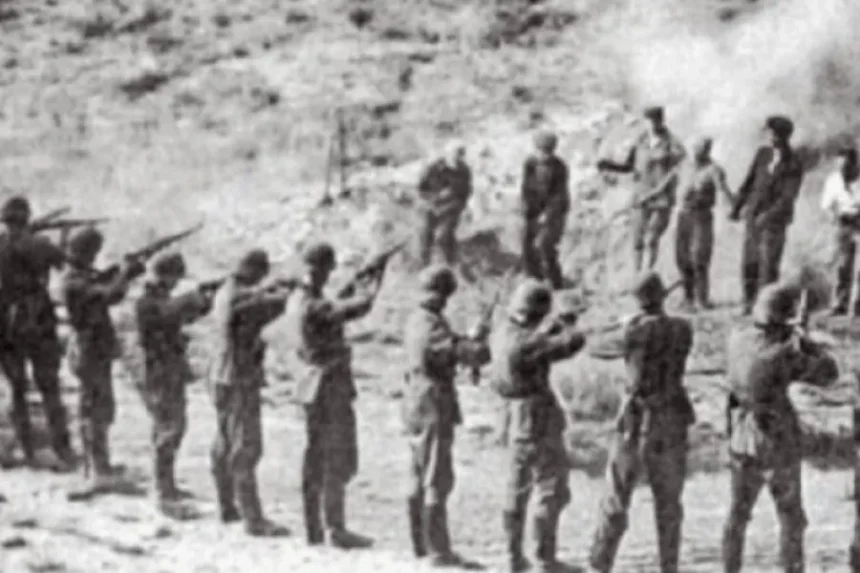
Albania marks the 82nd anniversary of the February 4, 1944 massacre, a controversial and tragic event during World War II in which it is believed that 84 anti-fascists were executed and around 400 others were sent to concentration camps.
Background of the Operation
The event, historically referred to as the “February 4 Massacre of 1944,” was described as a counter-operation by the authorities of the Albanian Kingdom in response to assassination attempts carried out by communist groups against political figures of that period. The name of the event derives from the edition of the newspaper “Bashkimi,” published one year later during the communist regime.
Uncertainty Over Motives and Victim Numbers
The massacre remains one of Albania’s most debated historical events, particularly regarding the exact motives behind the operation and the total number of victims. Albanian historiography continues to examine the incident, supported in part by British intelligence documentation from the time.
According to a file coded HS 5/96 from the British Special Operations Executive (SOE), partisan activity was intensifying around Tirana during early February 1944. The document also references a failed assassination attempt on Interior Minister Xhafer Deva, described as a collaborator with occupying forces. The report further suggests that approximately 60 prisoners identified as partisans were executed in retaliation.
Revelations from Communist Leadership Correspondence
In 2015, Albanian media published a previously secret letter from Communist Party leader Naho Spiru, addressed to Koçi Xoxe, Miladin Popoviç, and Liri Gega, with excerpts reportedly also sent to Enver Hoxha. In the letter, Spiru described the event as a massacre against communists, although he did not provide a confirmed number of casualties. He also expressed concerns that similar acts of violence could occur again.
Lack of Official State Clarification
Despite historical documentation and political debate, no definitive official explanation has been issued by the Albanian state regarding the massacre. However, available historical evidence suggests that significant violence occurred against communist insurgents who had risen against the ruling authorities of the time.
The February 4 massacre remains a symbol of Albania’s complex wartime history, continuing to spark discussion among historians and the public over accountability, historical interpretation, and collective memory.