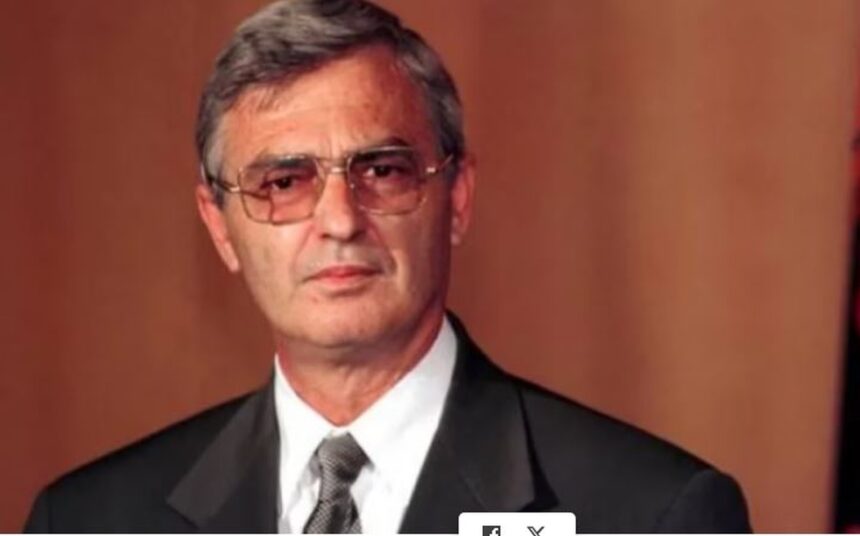
The debate over the Kosovo Specialist Chambers’ request for prison sentences totaling 180 years for former KLA leaders has sparked strong reactions in both Kosovo and Albania. In an interview with Top Channel, Rexhep Meidani criticized the indictments as unfair and rejected claims that the history of the Kosovo Liberation War is being rewritten.
Meidani, who led Albania from 1997 to 2002, including during the Kosovo War, described the indictments as “a shameful and disappointing decision,” but stressed that the history of the war cannot be distorted.
“It is impossible to change the true narrative of Kosovo’s liberation war and of the international community, which gave significant support to help the Albanian people of Kosovo achieve freedom,” he said.
According to Meidani, the Special Court’s current approach does not reflect the stance of the international community during the war years.
“Absolutely, the entire international opinion was in favor of the Albanian people of Kosovo and against Serbian revenge,” he added.
Speaking about the origins of the Special Court, Meidani pointed to earlier organ trafficking allegations made by former Hague Tribunal Prosecutor Carla Del Ponte as the starting point.
“A false situation was created, beginning with a publication by Carla Del Ponte. Then the matter moved to the Council of Europe, and pressure continued until Kosovo’s political forces agreed to create the Special Court outside Kosovo’s territory,” he explained.
Meidani noted that personally he had not supported the creation of the court, even though he held no official position at the time. The court was approved to allow verification and clarification of the process.
On the charges of serious crimes against former UÇK leaders, he stated:
“I have never believed them. They were leaders driven by emotion and a desire to liberate their country, ready to sacrifice their lives.”
He also shared observations from a visit to The Hague, noting fatigue and disappointment among the accused, though one of them “kept his humor and spent time painting.”
Finally, Meidani addressed the role of Kosovo institutions, suggesting that the Assembly of Kosovo should reflect on the continuation of the Special Court:
“The Assembly of Kosovo must act. It is even late. It should consider legislative adjustments, either to end this court or to make it a fully international structure without direct involvement of the Kosovo state,” he concluded.