Twenty-four years ago, the trial of former Serbian president Slobodan Milošević began at the International Criminal Tribunal for the former Yugoslavia in The Hague — a landmark case against a leader often referred to as the “Butcher of the Balkans.”
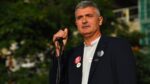
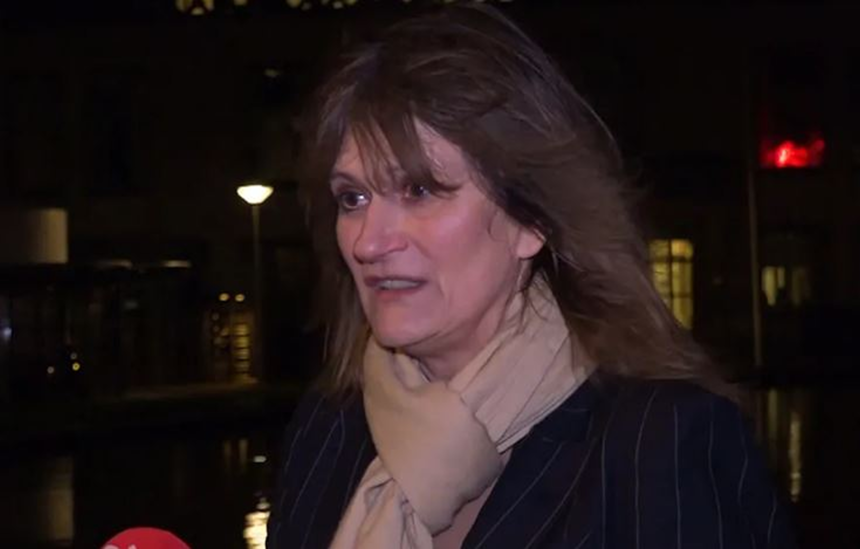
In an interview from the building that once housed the tribunal, former ICTY researcher Nevenka Tromp recalled the opening day of the trial on February 12, 2002, describing the square outside filled with satellite trucks and journalists from around the world.
“It was 24 years ago when Milošević’s trial began in this building behind me. If you look at the archival footage, the entire square was packed with satellite antennas from global media outlets. You could hardly move through the crowd of journalists — it was headline news worldwide. And now, 24 years later, we have a similar situation with the Kosovo Specialist Chambers, where Kosovo’s wartime leaders, opponents of Milošević’s regime, are delivering their closing statements in criminal proceedings against them,” Tromp said.
Milošević was charged with war crimes, crimes against humanity, and genocide in Croatia, Bosnia and Herzegovina, and Kosovo. Tromp, author of The Unfinished Trial of Slobodan Milošević, emphasized the historic importance of the case, particularly for Kosovo.
She noted that during nearly a decade in power — first as president of Serbia and later of the Federal Republic of Yugoslavia — Milošević presided over three consecutive wars marked by mass atrocities. After the 1995 Dayton Peace Agreement, where he appeared alongside Alija Izetbegović, Franjo Tuđman, and U.S. President Bill Clinton, he had an opportunity to rehabilitate his international standing.
However, Tromp argues that by engaging in the Kosovo war, he solidified his place in history as a negative figure responsible for widespread abuses of power and mass crimes.
Initially indicted only for crimes in Kosovo, Milošević was transferred to The Hague in June 2001. The prosecution later expanded the indictment to include crimes in Croatia (1991–1995) and Bosnia and Herzegovina, including genocide.
Tromp highlighted the significance of the genocide charges, noting that it marked the first time genocide related to the Yugoslav wars was prosecuted at the individual level. She added that parallel proceedings were initiated against Serbia as a state before the International Court of Justice.
Asked about the implications of Milošević’s unfinished trial, Tromp said that a final verdict establishing his personal criminal responsibility would have had far-reaching consequences.
“From a legal perspective, it would have been extremely important to have a judgment against him. A clearly established personal responsibility in legal terms would have implicated much more strongly the Serbian military and political leadership in criminal conduct. I am certain it would have been much more difficult, 20 years later, for the Kosovo Specialist Chambers to prosecute KLA leaders for crimes in Kosovo. It would have appeared far more morally questionable and detached from reality compared to what a verdict against Milošević as head of state would have contained,” Tromp stated.
She added that while he might not have been convicted on all 66 counts of the indictment, she believes he would likely have been found guilty on the majority of them. A conviction, she argued, would have reinforced the narrative of asymmetrical responsibility in the wars of Yugoslavia — meaning that no other individual or state bore greater responsibility for the violent dissolution and accompanying crimes than Milošević, the Serbian political, military, and police leadership, and ultimately Serbia as a state.
Milošević’s trial began on February 12, 2002, and lasted until March 2006, but no final verdict was delivered as he died in his detention cell before the proceedings concluded.