European Commissioner for Enlargement Marta Kos has announced that Montenegro’s future EU accession agreement will include so-called safeguard measures to address any potential backsliding in democracy and the rule of law.
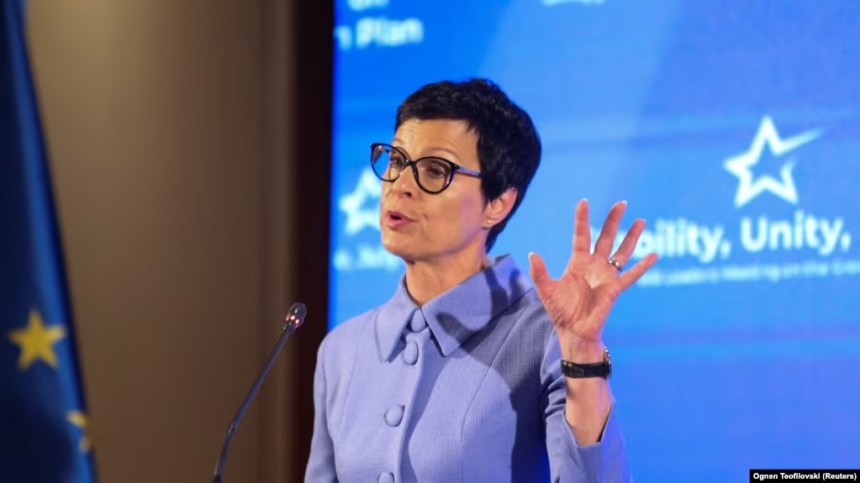
Speaking at a conference on EU enlargement in Tallinn, Estonia, Kos described the upcoming agreement as “the first of a new generation” of accession treaties. She emphasized that these safeguards would remain in effect only as long as necessary and would not create a two-tier membership for countries fully aligned with EU law.
“Simply put, if new member states respect the rules, they will not even notice these safeguards,” Kos said.
Purpose of Safeguard Clauses
Accession agreements typically include temporary, targeted clauses covering economic issues, the internal market, and justice or internal affairs, allowing the EU to suspend certain rights or funding if a candidate country fails to meet its obligations.
The proposed reforms for future enlargement, particularly for Western Balkans and Eastern Partnership countries, aim to extend these clauses to democracy and the rule of law, ensuring that fundamental EU values are upheld throughout the integration process.
Montenegro Leads the Way
Montenegro is currently the frontrunner in the EU accession process, having temporarily closed 13 negotiating chapters and aiming to close 20 more by the end of 2026. This progress aligns with the national goal of “28 by 28”, potentially making Montenegro the 28th EU member by 2028.
Commissioner Kos confirmed that the European Commission will soon submit the proposed accession agreement to EU member states for discussion, marking a significant test case for the next generation of EU treaties.
“If countries backslide on our core values, such as democracy and the rule of law, the safeguard measures must be effective,” Kos stressed.
The European Union last expanded in 2013, when Croatia joined, marking the longest period in EU history without new members. Meanwhile, the bloc experienced contraction with the UK’s departure in 2016 following the Brexit referendum.