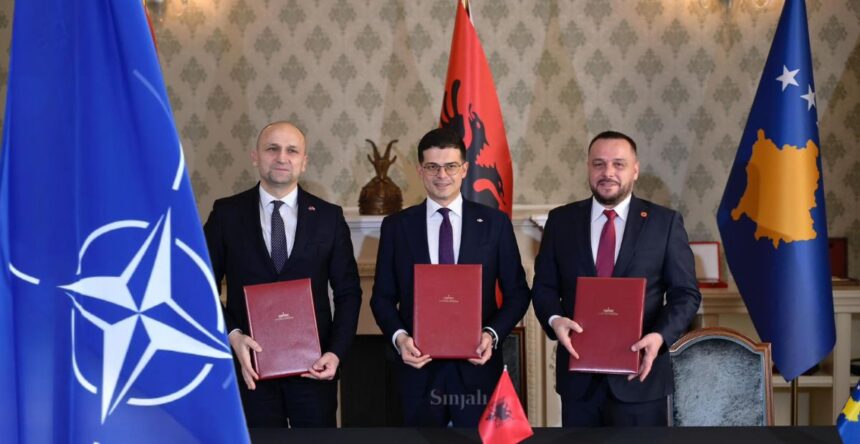
The emerging military cooperation between Kosovo, Albania, and Croatia has been confirmed by NATO as a positive contributor to peace and stability in the Western Balkans, despite warnings from Serbia’s leadership.
Deputy Secretary General of NATO, Radmila Šekerinska, emphasized the importance of defense investments for regional security, noting that the Western Balkans are influenced not only by global geopolitical developments but also by ongoing political dialogue among states.
In an interview with Beta Agency, Šekerinska stressed that all countries in the region are capable and interested in contributing to stability. She highlighted that NATO encourages local authorities to engage in dialogue, resolve outstanding political issues, and support prosperity and security.
Responding to Serbian concerns about joint military exercises and the 2025 defense cooperation declaration signed by Zagreb, Tirana, and Prishtina, Šekerinska clarified that Albania and Croatia, as NATO members, are reliable allies and key contributors to regional peace, also participating actively in KFOR operations.
She also noted that NATO was not involved in drafting this trilateral agreement, but emphasized that membership in the Alliance does not prevent countries from forming other defense partnerships.
Meanwhile, at the Munich Security Conference, Croatian Defense Minister Ivan Anušić reiterated that the trilateral cooperation poses no threat to anyone, directly countering Serbian President Aleksandar Vučić’s warnings that it would lead to increased military investments and potential regional tension.
Šekerinska concluded by underlining NATO’s support for political dialogue between Belgrade and Pristina and reaffirmed that security, peace, and prosperity remain the only viable path for the Western Balkans.
This NATO endorsement comes amid rising regional tensions and debates over Serbia’s military posture, reinforcing the notion that cooperative defense initiatives, rather than unilateral threats, are essential for lasting stability.