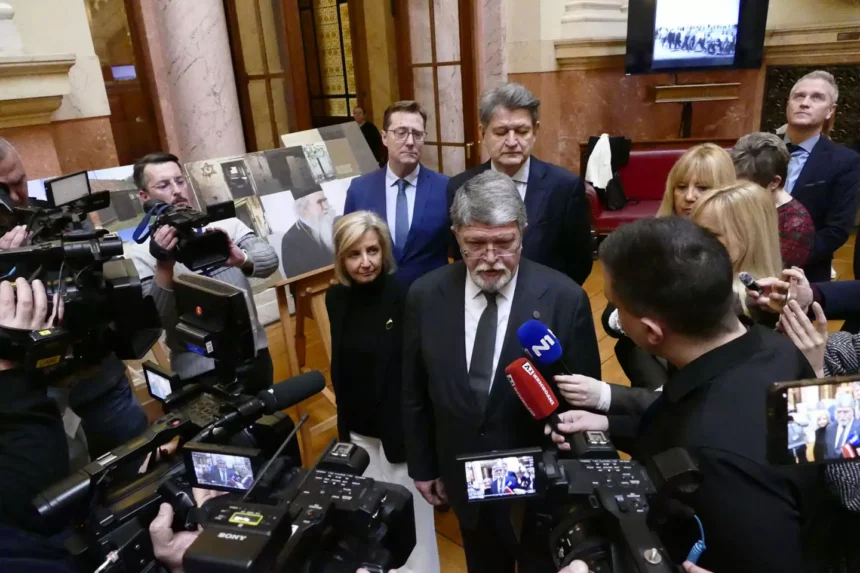
Members of the Committee on Foreign Affairs of the European Parliament, who visited Serbia from January 22 to 24, 2026, have highlighted in their report that the political landscape in Serbia is deeply polarized and called for urgent and transparent investigations into allegations of disproportionate use of force and unlawful surveillance of protesters.
During their visit, the delegation engaged with media representatives, civil society organizations, research centers, academics, and students, while President Aleksandar Vučić and Parliament President Ana Brnabić were abroad and did not meet with the delegation.
Key Findings and Recommendations
The report stresses that Serbia’s EU accession process must be merit-based, relying on the respect for democracy, the rule of law, fundamental rights, media freedom, and judicial independence, alongside full alignment with the EU’s Common Foreign and Security Policy.
European Parliament members expressed solidarity with Serbian citizens, students, and civil society actors, urging authorities to:
- Conduct immediate, impartial, and transparent investigations into all allegations of excessive use of force;
- Investigate cases of illegal surveillance of demonstrators;
- Protect academic freedom and media independence;
- Ensure ongoing judicial reforms do not undermine the independence of the judiciary;
- Strengthen electoral integrity and implement outstanding recommendations from OSCE/ODIHR.
The delegation emphasized that the European Parliament’s Foreign Affairs Committee will closely monitor political developments in Serbia, including challenges to fundamental freedoms and civic space, which will inform the upcoming annual report on Serbia.