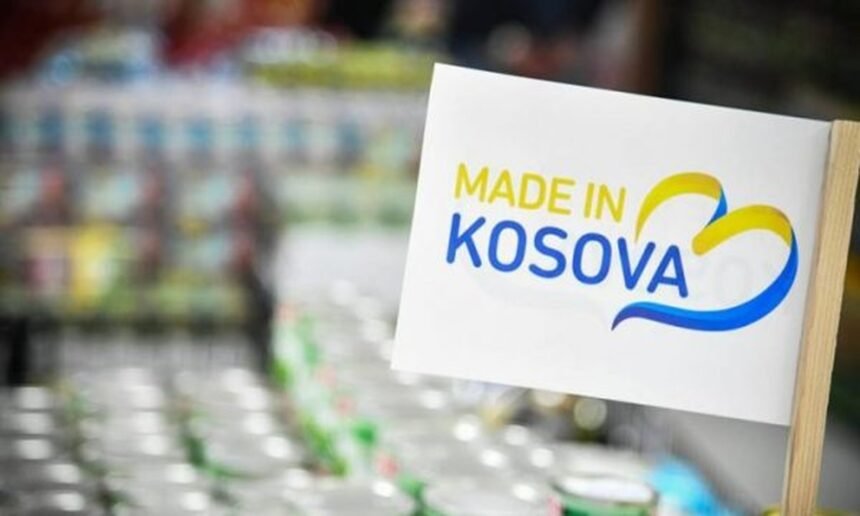
For more than two decades, products manufactured in Kosovo have entered international markets under a foreign identity.
On the shelves of European and global stores, oils, beverages, and other products labeled “Made in Kosova” were often registered as originating from Albania or other countries—not because of where they were produced, but due to the lack of an internationally recognized national barcode.
This has been a less visible consequence of Kosovo’s status as the youngest state in Europe, which continues to face partial international recognition and incomplete integration into many global mechanisms.
However, the situation is now changing.
This month, Kosovo secured the international barcode prefix 381, giving domestic products, for the first time, a globally verifiable identity.
For a country aiming to increase exports and integrate more deeply into the European and global markets, experts consider this an important step toward consolidating economic sovereignty and strengthening its presence in international supply chains.
A barcode is a unique identification number containing information about the company and the product’s country of origin, which can be scanned anywhere in the world through optical devices or mobile applications.
Borrowed Identity for Domestic Products
The company “Fluidi” from Gjilan, which produces cooking oil and soft drinks, is among Kosovar manufacturers that for years had to obtain barcodes abroad in order to export.
“On the shelves of European and global markets, products made in Kosovo appeared as originating from Albania or other countries,” owner Berat Mustafa told Radio Free Europe.
According to him, about 30 percent of the company’s production is exported to regional countries, Europe, and Africa. Until now, each product required securing a barcode outside Kosovo.
“I purchased barcodes in Albania, since I have the company registered there and it was easier. Many Kosovar businesses have done the same, or used barcodes provided by buyer companies in export markets,” Mustafa explained.
Although legally permissible, this created a paradox: products were manufactured in Kosovo but were not officially identifiable as such within the global trade system, limiting their visibility and their ability to build an international reputation.
Mustafa says he paid more than €200 per year in Albania for barcodes for ten of his products.
“The financial cost is not very high, but barcode 381 directly promotes our products and the state of Kosovo itself,” he added.
From Emergency Solution to International Recognition
Until now, Kosovo used barcode prefix 390, introduced in 2003 by the Kosovo Chamber of Commerce as an emergency solution for scanning products within the domestic market.
However, this code was not part of the global product identification system. In practice, this meant that Kosovar products could circulate locally but required foreign identification systems for export.
The situation changed this month when Kosovo, through the Kosovo Chamber of Commerce, began issuing barcodes with the 381 prefix—six months after joining the global GS1 network.
GS1 is an international non-profit organization headquartered in Brussels that develops and administers global standards for identifying products, services, and supply chains worldwide. The system is used by millions of companies and is essential for modern trade, logistics, and retail.
Ending a Practice That Weakened the “Made in Kosova” Identity
Kushtrim Ajvazi, head of the Kosovo Producers Association, said that borrowing foreign barcodes not only increased administrative and financial costs but also diluted the identity of Kosovar products in international markets.
For a small and developing economy like Kosovo, building a recognizable export identity is critical for attracting trade partners and foreign investment.
“GS1 in Kosovo represents the identification of ‘Made in Kosova’ products in the global market,” Ajvazi told Radio Free Europe.
He added that the new system also increases transparency for consumers.
“Through the barcode, consumers can verify the product’s origin, manufacturer, and content—raising trust and market security,” he said.
Barcode Alone Will Not Solve Export Challenges
While considered an important step, business representatives warn that the international barcode does not solve all challenges faced by Kosovar producers.
Kosovo remains a small economy of around 1.5 million people, with a limited production base and high dependence on imports.
Agim Shahini, head of the Kosovo Business Alliance, said structural challenges remain the main obstacle.
According to him, inadequate fiscal policies and rising operational costs—especially electricity prices after businesses entered the open market last year—have reduced competitiveness.
He added that Kosovo has export potential but requires stronger institutional support and a more coordinated strategy to penetrate foreign markets.
“We remain a country that wants exports, but in practice we favor consuming foreign products. We have become loyal to imported goods,” Shahini said.
Trade Deficit Remains the Main Challenge
The imbalance between imports and exports remains one of the clearest indicators of economic challenges.
According to Kosovo Customs data, last year the country imported goods worth over €7 billion, ranging from food to construction materials and textiles.
In the same period, exports reached around €942 million—approximately €2.6 million per day.
In this context, experts say barcode 381 represents more than a technical change. It is a step toward strengthening the identity of Kosovar products in the global market, but its success will depend on Kosovo’s ability to support producers and transform this identity into a real economic advantage.
Prime Minister Albin Kurti, who began his new mandate last week, has pledged €1 billion in guarantees and loans for producers.
Mustafa plans to sell existing stock under the old system and register new products with barcode 381, convinced that this code will place Kosovar products on international markets with a clear and undeniable identity: “Made in Kosova.”