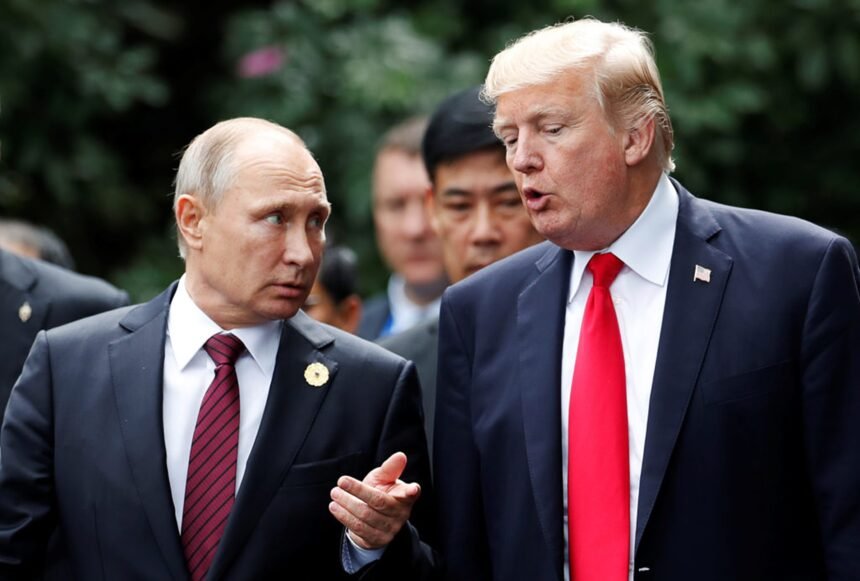
The President of the United States, Donald Trump, has extended U.S. sanctions against Russia for an additional year, citing Moscow’s annexation of Crimea, its war in Donbas, and the full-scale invasion of Ukraine as continuing threats to American national security and foreign policy.
According to the official document, the decision prolongs restrictions introduced under several executive orders issued in 2014, 2018, and 2022, all related to Russia’s actions in Crimea and the broader conflict involving Ukraine. The measures will remain in force beyond March 6, 2026.
“The actions and policies addressed in these Executive Orders continue to pose an unusual and extraordinary threat to the national security and foreign policy of the United States,” Trump said, adding that under the National Emergencies Act he is extending the national emergency declared in Executive Order 13660 for one year.
Executive Order 13660 forms the legal foundation of Washington’s sanctions framework against Moscow, while additional measures—such as Executive Orders 14065 and 14068 issued in 2022—expanded restrictions following Russia’s full-scale invasion.
The sanctions include several key measures targeting Vladimir Putin’s allies and Russia’s strategic sectors, including:
- Sanctions on Russian officials, oligarchs, and associates of the Kremlin leadership
- Sectoral restrictions limiting access to Western technology, capital, and energy equipment
- Bans on imports and exports of strategic goods
- Limitations on financial transactions involving Russian sovereign debt
According to data cited by United24, sanctions pressure has significantly reduced Russia’s trade exposure, bringing it to its lowest level in more than three decades, comparable to the final years of the Soviet Union.
In 2025, Russia’s exports accounted for 17.8% of GDP, down from 22.2% the previous year, while imports declined from 17.8% to 15.2%, reflecting the ongoing economic impact of international restrictions.