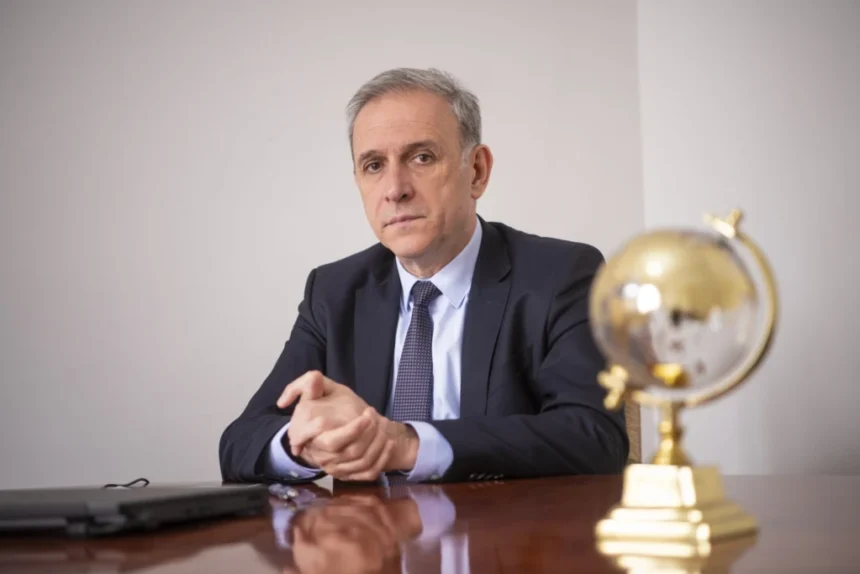
Zdravko Ponoš, leader of the Srbija centar (SRCE) party and former Chief of the General Staff of the Serbian Armed Forces, has sharply criticized the current government, warning that the authorities are preparing to control key institutions ahead of future elections in order to ensure political survival.
In an interview, Ponoš argued that early parliamentary elections will not depend solely on the decision of Serbia’s president, Aleksandar Vučić, but also on internal dynamics within the ruling structure and competing interests among its senior officials**. According to him, potential personal sanctions from Western partners against certain Serbian officials could transform internal political competition into a “fight for survival.”
Ponoš said he had previously proposed targeted European sanctions in Brussels and noted that the United States later adopted legal frameworks allowing similar measures. He suggested that sanctions should focus on mid-level officials without diplomatic protection, including travel restrictions and measures targeting financial assets abroad.
He also accused the government of attempting to reshape state institutions to consolidate power. “If a law bothers me – I will change the law; if the prosecution bothers me – I will dismantle it; if the police bother me – I will create another one with loyal officers,” Ponoš said, claiming that such actions are designed to enable election manipulation and the misuse of state authority without accountability.
According to the opposition leader, the government’s strategy includes strengthening control over security structures, particularly special police units, and adopting legal changes that could affect electoral rules. He warned that the authorities intend to ensure that all mechanisms of power remain under their influence ahead of the next vote.
Ponoš also spoke about growing political tensions in Serbia, stating that public dissatisfaction has increased after months of protests, while international attention toward the country has intensified. Despite this, he emphasized that opposition forces must focus on mobilizing citizens and cooperating where possible, especially in efforts to secure fair electoral conditions.
Commenting on relations with the European Union, Ponoš argued that Serbia’s current leadership has pursued a foreign policy balancing multiple global actors but that this approach has become increasingly difficult amid shifting geopolitical circumstances. He added that Serbia could enter a period of major political change following the next elections, either through a change in government or a continuation of the current political system.
“The next elections are, for the authorities, a matter of staying in power or facing legal consequences,” Ponoš said. “For the rest of us, they are about saving the country.”