The propaganda to which Serbians are exposed every day is systematic, coordinated, and strategically deployed, not random or spontaneous. According to a recent Istinomer analysis, President Aleksandar Vučić leads a broad network of political, media, academic, and cultural actors whose purpose is to shape and control public narratives in his favor.
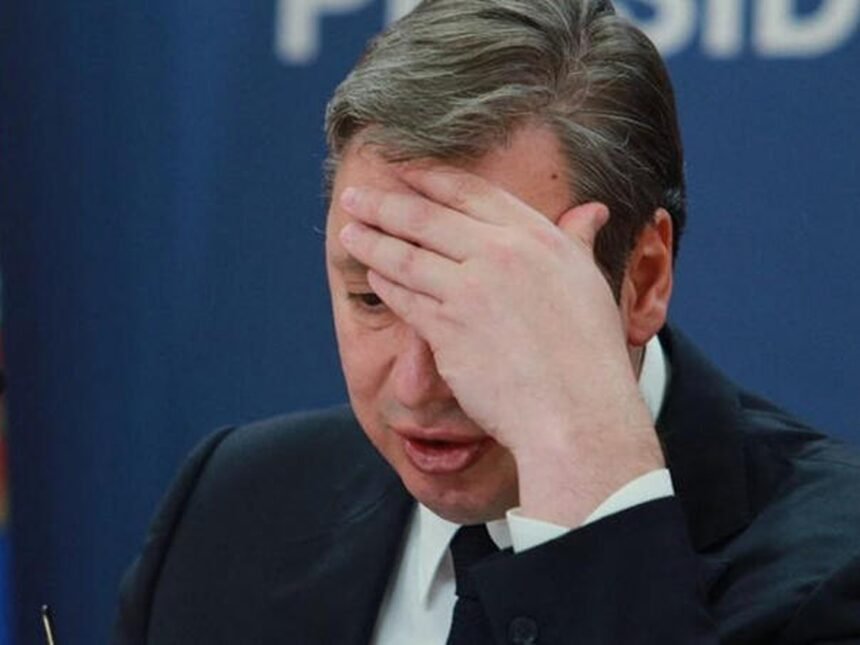
In this propaganda architecture, Vučić is not just a participant — he is the main storyteller, moral authority, and self‑declared savior of the nation, dictating both the content and tone of public messaging.
Structural Control of Public Narrative
According to Istinomer, the ensemble includes:
- Political elites aligned with the ruling party
- State‑linked media figures
- “Freelance experts” and commentators who regularly echo official positions
- Cultural and intellectual personalities who repeat government narratives
Together, they form a well‑oiled network that produces fog and spin, amplifies fear, and distracts the public from issues of accountability and democratic contestation.
Vučić: “Director and Filter”
As the central figure of this ensemble, Vučić:
- Appears on TV and media platforms far more often than any other politician, with hundreds of appearances annually.
- Sets the narrative agenda on issues ranging from protests to foreign policy and electoral politics.
- Decides what becomes a state “official stance” and what is dismissed as mere media noise, carefully filtering messages for domestic vs. international audiences.
This positions him simultaneously as guarantor of stability and perpetual target of external and internal enemies, a dual role that is a cornerstone of his public communications.
Common Narrative Themes
Vučić’s media strategy frequently relies on a set of recurring narratives:
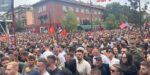
- Protests are framed as “violent colored revolutions” rather than expressions of legitimate civic grievances.
- Political opponents and critical voices are labeled “antiserbian” or foreign‑influenced, reinforcing a siege mentality.
- Presenting Serbia as under attack both at home and abroad, while portraying himself as the only leader capable of defending it.
Spread and Coordination of Messaging
Istinomer has documented how not only Vučić himself, but also a large cohort of aligned political actors, media hosts, analysts, and public figures repeat syncopated talking points. In one instance, over 50 different speakers issued nearly identical warnings of chaos ahead of student protests, pushing fear‑based messages in the mainstream narrative.
This “propaganda gendarmerie,” as the analysis calls it, operates through both traditional broadcast networks and newer social media channels, reinforcing the same themes and suppressing dissenting interpretations.
Institutional Effects and Public Impact
By dominating media space — often with hundreds of television appearances every year — Vučić and his ensemble have cultivated a dominant public narrative that crowds out independent voices. Critics argue this erodes democratic debate, distorts public understanding, and shields political leadership from accountability.
Independent watchdogs warn that such highly coordinated messaging can demobilize political participation, normalize repression, and marginalize critics under a veneer of patriotic urgency.