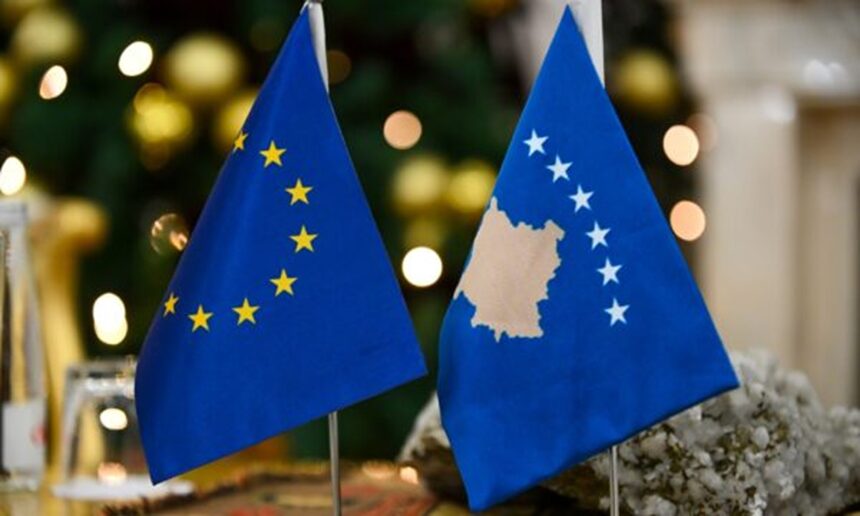
With the formation of the new government and the celebration of Kosovo’s 18th Independence Anniversary, the country received a wave of congratulatory messages from top European leaders and international diplomats. Beyond ceremonial diplomacy, the core of these messages focused on implementing the Brussels Agreement and the Ohrid Annex, accelerating reforms, and committing to dialogue with Serbia.
President Emmanuel Macron of France delivered a clear and direct message, emphasizing the need to fulfill commitments. In a letter to President Vjosa Osmani, he stated:
“The Brussels and Ohrid Agreements have set the direction, and it is up to both sides to fulfill their obligations.”
Macron highlighted that regional peace is not optional but non-negotiable.
“In this spirit, the normalization of relations between Kosovo and Serbia remains a central issue for reconciliation in your region. France will continue to support the EU-facilitated dialogue. The agreements reached in Brussels and Ohrid are particularly important. It is up to the parties to implement them promptly and fully,” Macron added.
Similarly, Berlin placed the dialogue with Serbia at the center of expectations for Kosovo’s new mandate. German Chancellor Friedrich Merz called normalization a necessary and inherent task of governance:
“You and your government face challenging tasks. I am confident that with your experience, you will make the right decisions necessary for Kosovo’s further Euro-Atlantic integration, including steps within the EU-mediated dialogue for normalization with Serbia,” Merz wrote.
French diplomacy in Pristina reinforced Macron’s message, linking institutional legitimacy with the fulfillment of dialogue obligations:
“We will continue to support the dialogue… and the implementation of the Brussels and Ohrid Agreements.”
Meanwhile, UK Ambassador Jonathan Hargreaves stressed that Kosovo must maintain continued engagement in EU-facilitated dialogue, calling the efficient functioning of the Assembly and Government essential for the country’s progress.
European Commission Vice-President Kaja Kallas also highlighted the urgent need for rapid reforms, describing them as the only path to unlock European support and advance the dialogue process.