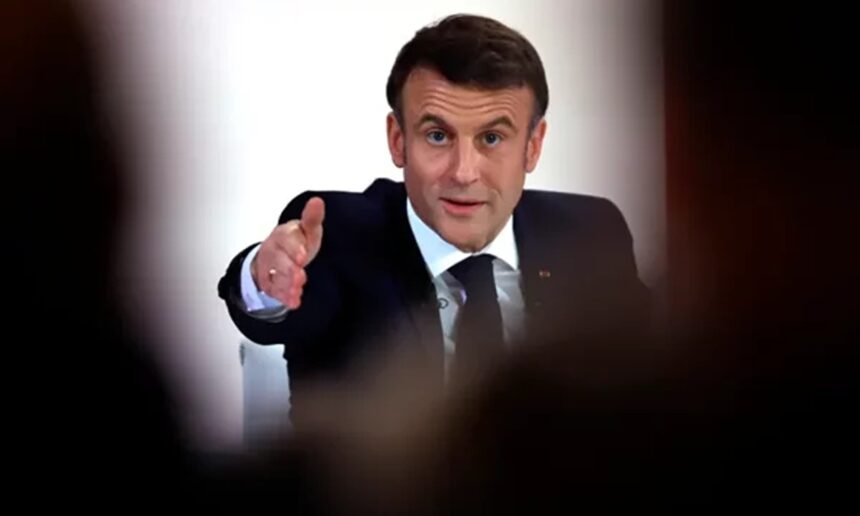
French President Emmanuel Macron is expected to present a new vision of how France could contribute to Europe’s nuclear deterrence, emphasizing that any expansion of France’s role would complement—not replace—the security umbrella provided by the United States.
The speech, scheduled for Monday, will be delivered from the Île Longue peninsula in north-western France, home to the country’s four nuclear-powered ballistic missile submarines. It will be Macron’s first major address on nuclear deterrence since a 2020 speech in which he offered to involve European partners in discussions and exercises related to France’s nuclear doctrine.
Renewed Interest Across Europe
When Macron first floated the idea of extending elements of France’s nuclear deterrence to European allies in 2020, the proposal received little attention. However, the geopolitical landscape has changed significantly in recent years.
Russia’s full-scale invasion of Ukraine and the return of Donald Trump to the White House have prompted many European leaders to reassess their reliance on U.S. security guarantees. According to sources close to Macron, these developments have triggered growing interest among European partners in discussing nuclear deterrence.
Earlier this month, Macron confirmed at the Munich Security Conference that he had held strategic talks with German Chancellor Friedrich Merz and other EU leaders about how national nuclear doctrines might be coordinated at the European level.
Concerns Over Global Security Shifts
European concerns have also been heightened by signals that the United States could reduce some of its military presence in Europe as it shifts focus toward the Indo-Pacific region. While European leaders continue to express confidence in long-term U.S. commitments to NATO, discussions about strengthening Europe’s own defense capabilities have intensified.
At the same time, officials warn that the global environment is becoming more volatile, citing:
- Russia’s development of new hypersonic missile systems
- China’s rapid expansion of its nuclear arsenal
- Uncertainty surrounding Iran’s future nuclear ambitions
These factors, according to French officials, are encouraging more EU countries to engage in strategic dialogue on nuclear deterrence.
France’s Doctrine: “Strict Sufficiency”
France’s nuclear policy is based on what it calls “strict sufficiency”, meaning it maintains only the number of nuclear weapons necessary to deter potential adversaries. France is estimated to possess around 300 nuclear warheads, significantly fewer than the arsenals of the United States and Russia, each believed to have more than 3,500.
Officials stress that France does not view its policy as part of a nuclear arms race, but rather as a guarantee that it could inflict unacceptable damage on any aggressor if necessary.
Cooperation with the United Kingdom
Europe’s two nuclear-armed powers—France and the United Kingdom—have also increased coordination in recent months. Last summer, the two countries signed the Northwood Declaration, which created a Nuclear Steering Group to guide cooperation and allow participation in each other’s nuclear exercises.
Macron’s upcoming speech is expected to clarify how France could deepen cooperation with European allies while maintaining the central role of NATO and the U.S. deterrence framework.