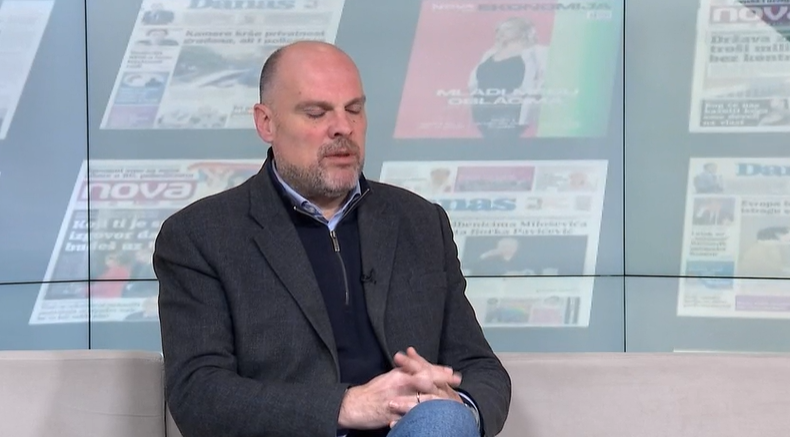
Stevan Ristić, director of the weekly magazine Vreme, stated that the controversial “Mrdić laws” were introduced by the government as a reserve plan in case prosecutors aligned with Nenad Stefanović failed to secure a majority in the High Council of Prosecutors (VST). Ristić indicated that the authorities are prepared to withdraw the legal changes if no longer needed.
Ristić explained, “The perception of the government’s and Vučić’s strength created the advantage, as it did in the VST elections. The Mrdić laws were meant to do what the VST could not. Now it seems they are ready to withdraw them. This was a backup plan.”
The first VST election results were challenged after prosecutors close to Stefanović filed complaints. Following a Constitutional Court decision led by Vladan Petrov, repeated elections were held, in which Nikola Uskoković, a prosecutor from the Belgrade Higher Public Prosecutor’s Office, received the most votes.
According to Ristić, the initial voting reflected prosecutors acting independently, while the repeated elections were influenced by pressure from the ruling Serbian Progressive Party (SNS), with alleged involvement of the BIA and Military Intelligence Agency.
Ristić noted that the public remains disengaged, and opposition forces could capture Vučić’s disillusioned voters if they present a credible alternative. He emphasized that the government has spent the past year consolidating its core base of radical supporters but has lost approximately 20% of voters who may not return without a compelling alternative.
Local elections scheduled for March 29, 2026, in nine municipalities, including Bor, Aranđelovac, Bajina Bašta, Kladovo, Knjaževac, Kula, Lučani, Majdanpek, and Smederevska Palanka, will serve as a test of opposition mobilization and voter influence.
Ristić also criticized government media tactics, highlighting incidents where individuals like actor Dragan Bjelogrlić were harassed publicly by provocateurs, while pro-government outlets praised compliant journalists and rewarded loyal supporters, creating an environment where the worst performers are elevated for loyalty and financial incentive.
“Vučić turns the worst into the best, because they are loyal to him, and they are loyal because he pays them well,” Ristić concluded.