For years, analysts say, the Serbian government has relied on a revolving set of narratives to divert public attention, while the operations of networks controlling political and economic power continue largely unchallenged.
Journalist Vera Didanović describes a pattern of repeated topics, including grand promises of progress, warnings of global catastrophes, election announcements, government reshuffles, military service debates, and flashy new political movements. The sequence is deliberately cyclical, ensuring the public remains engaged with transient stories while underlying power structures operate without scrutiny.
Election Talk and Government Reshuffles
In times of crisis, these recurring topics intensify. Currently, Serbia is witnessing simultaneous discussions about year-end elections and potential cabinet reshuffles, a scenario that under normal circumstances would seem contradictory. Analysts note that even if elections were held at the end of the year, new government members would have little time to establish themselves before the official campaign, raising questions about the true intent of these narratives.
The strategy benefits both factions of the population: those hoping for a peaceful resolution of political crises and loyalists who receive reassurance that the government remains stable, regardless of internal inefficiencies or controversies.
Historical Patterns of Government Spin
The report highlights that past government reshuffles—from 2012 onward—rarely altered the core dynamics of political power. Changes such as the entrance and exit of ministers mainly affected personnel rather than policy, and major announcements, such as high-profile resignations or appointments, served more to generate attention than substantive reform.
The current climate reflects similar tactics: promises of national advancement, technological breakthroughs, and futuristic projects, from flying cars in Belgrade to artificial intelligence initiatives, are deployed to maintain public engagement. Despite most promises remaining unfulfilled, these narratives continue to capture attention and reinforce the perception of active governance.
Recurring Themes and Media Spectacles
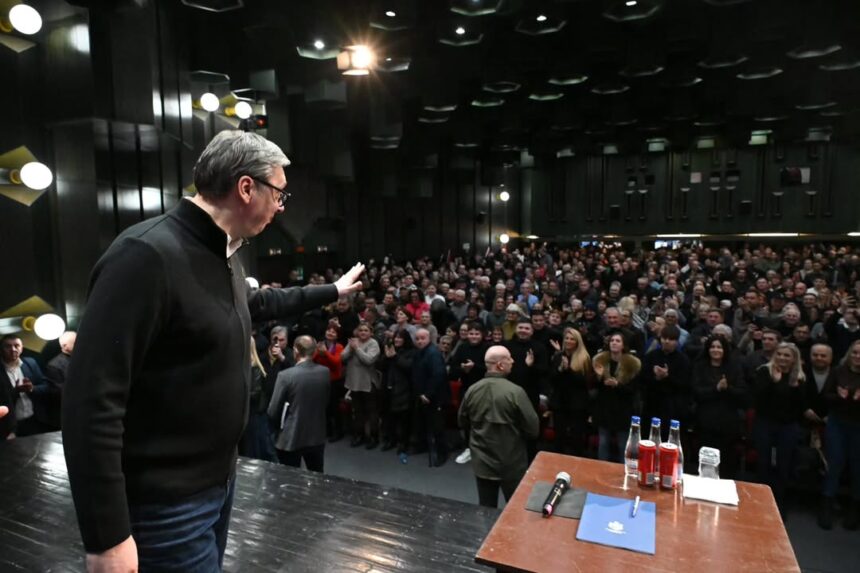
Beyond policy announcements, the government employs personalized media spectacles. President Aleksandar Vučić’s daily routines, meals, and appearances are broadcast, creating a sense of intimacy and reassuring the public of his constant vigilance. Meanwhile, political initiatives such as the Movement for the People and the State serve as recurring storylines to maintain attention on new or revitalized government projects.
Even seemingly trivial stories, such as the president’s meals or hotel stays abroad, are crafted as “reality-style” episodes to keep the public focused on leadership narratives, diverting attention from underlying systemic issues or ongoing political maneuvering.
Conclusion
Analysts argue that this approach—recycling themes, dramatizing leadership, and alternating between promises and warnings—keeps Serbian citizens engaged while real political and economic operations continue largely unexamined. The interplay of distraction, spectacle, and incremental reform creates a highly managed media environment, illustrating the government’s long-standing strategy to maintain influence and public compliance.