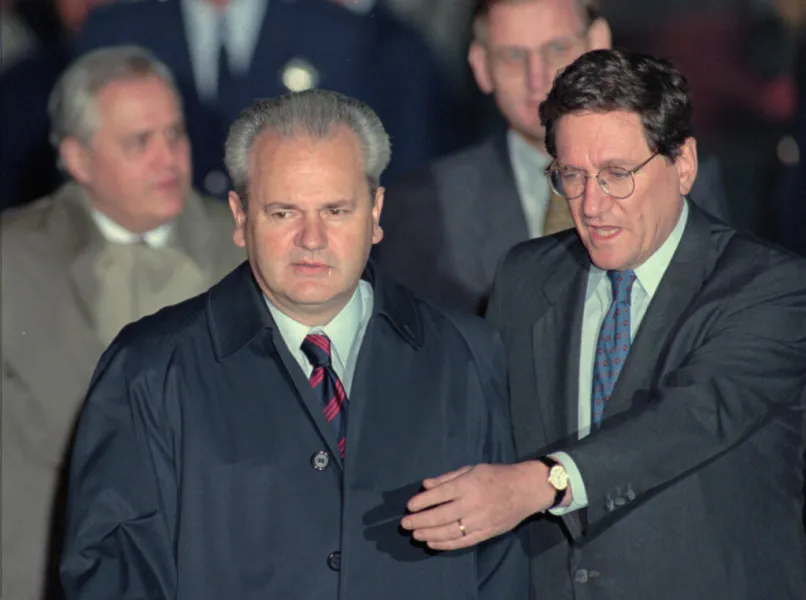
On March 23, 1999, Richard Holbrooke, U.S. Special Envoy for Kosovo, left yet another meeting with Slobodan Milošević in Belgrade empty-handed. Milošević told Holbrooke that Yugoslavia and Serbia would not accept what they called a U.S. and NATO ultimatum to withdraw forces from Kosovo—a plan that international mediators referred to as a peace proposal.
Holbrooke later explained that during two days of intensive talks, he had emphasized two points: evidence of a ceasefire in Kosovo and readiness to immediately deploy a NATO-led force in line with the Rambouillet agreements. This force would be neutral, aimed solely at maintaining peace in the region. However, no commitments were made by Yugoslav authorities. Holbrooke then proceeded to Brussels to report the outcome to NATO Secretary General Javier Solana.
Holbrooke also noted that Serbian politicians and media deliberately misrepresented NATO’s position, portraying the Alliance as pro-Albanian and anti-Serb. The Serbian parliament and Milošević rejected the peace plan, leaving diplomatic efforts stalled.
According to Holbrooke, after the failed negotiations in Belgrade, diplomacy had run its course. The matter now officially passed to NATO. Channels remained open, but the mission had no chance of further progress, prompting President Clinton to recall the U.S. team.
The next day, NATO launched air strikes against Serbo-Yugoslav forces, lasting 78 days. On June 10, Milošević accepted defeat, and Serbia permanently lost Kosovo. Two days later, NATO and the Kosovo Liberation Army entered Kosovo, effectively liberating the territory.