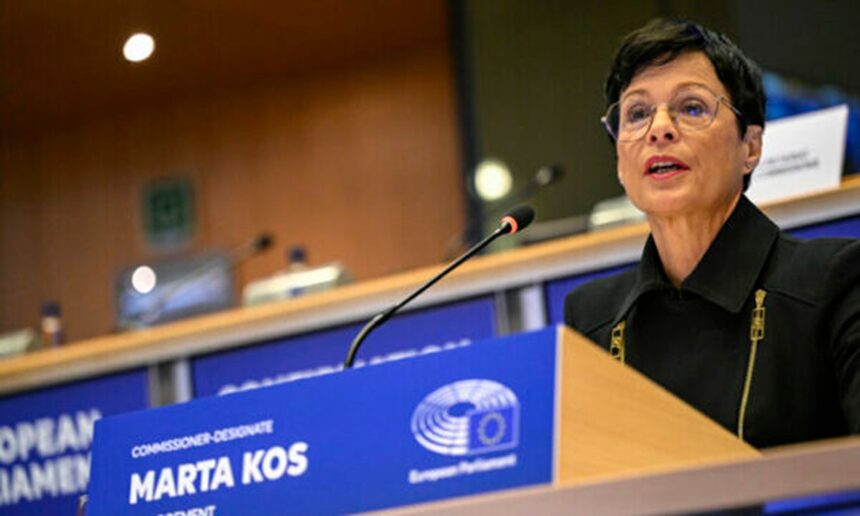
The future of EU enlargement has returned to the center of debate in Brussels, with Marta Kos urging member states to propose concrete solutions after rejecting the so-called “reverse enlargement” model.
According to the European Commission, three main options were initially considered: maintaining the current system, reforming the EU to accelerate accession, or allowing candidate countries earlier access to EU benefits before completing full reforms. The third option—backed by Ursula von der Leyen—has now been dismissed by member states as too ambitious and incompatible with existing rules.
With the status quo also deemed insufficient, attention is shifting toward a “phased accession” model. This approach would allow countries like Serbia and others in the Western Balkans to gradually integrate into EU policies, institutions, and funding mechanisms before achieving full membership.
Experts suggest this model could include limited voting rights for new members during a transition period and stronger monitoring mechanisms even after accession. The goal is to make the process both faster and more credible.
The renewed urgency comes amid geopolitical pressures following the Russian invasion of Ukraine, which has pushed the EU to reconsider expansion as a strategic priority to counter external influence.
While countries like Montenegro and Albania are advancing in negotiations, Serbia has lagged behind, partly due to its foreign policy alignment issues with the EU.
Analysts warn that without a clear roadmap, enlargement risks stalling entirely, as candidate countries grow increasingly frustrated with delays.