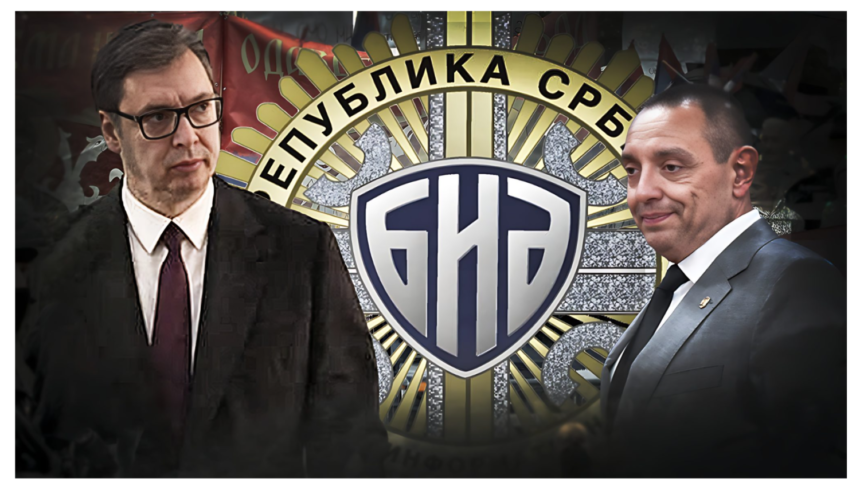
Over three days surrounding Kosovo Prime Minister Albin Kurti’s meeting with French President Emmanuel Macron, Serbian President Aleksandar Vučić deployed a carefully structured information operation, illustrating Thomas Rid’s principle that disinformation becomes effective when it is institutionalized.
Vučić first claimed inside knowledge of Kurti’s agenda, alleging demands on NATO troop movements and French weapons, framing them as intelligence. The next day, Milovan Drecun, head of Serbia’s parliamentary Defence Committee, treated these claims as factual in a formal security assessment broadcast on state television. By the time Kurti’s own readout emerged—detailing NATO’s role, EU alignment, and bilateral dialogue—Belgrade’s threat narrative had already been institutionalized.
The operation escalated on Saturday, with Vučić asserting sources inside the Élysée, introducing unresolvable doubt into French-Kosovo relations. A concurrent statement about Serbia’s command over its weapons served as a subtle warning to France while remaining legally defensible.
Shala highlights that this pattern reflects a longstanding model in Serbian intelligence, where political leadership and state security functions are deliberately permeable. The tactic is not persuasion but erosion: it neutralizes the authority of factual reporting by inserting competing narratives into the official record.
While Vučić’s operation sought to preempt and discredit, Kurti’s diplomatic approach at the Élysée successfully advanced Kosovo’s European integration agenda, demonstrating the contrast between strategic institutional influence and resilient diplomatic engagement.