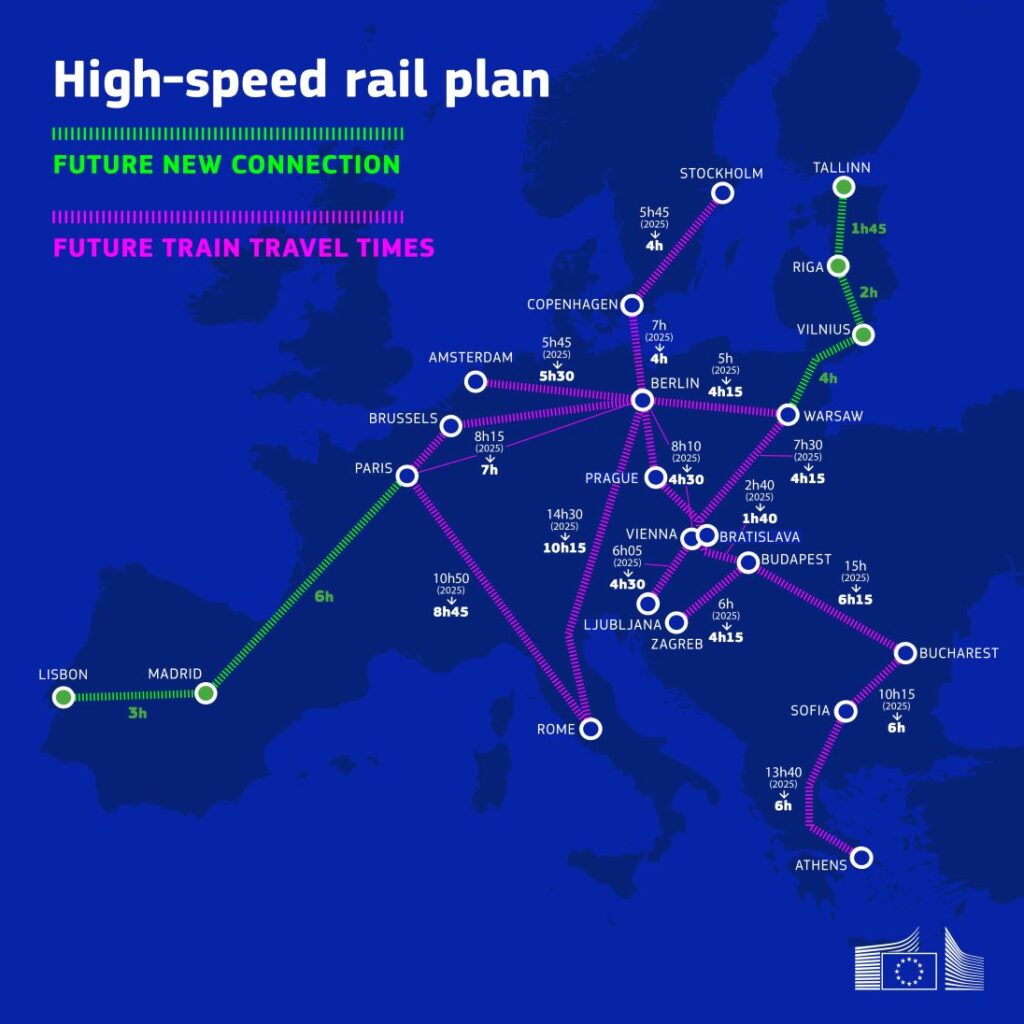
The European Commission has unveiled an ambitious plan to connect almost every major European city by high-speed rail by 2040 — yet Serbia has been completely excluded from the map.
While sleek, ultra-fast trains are set to link Berlin and Copenhagen in just four hours by 2030, and Sofia and Athens in six hours by 2035, Serbia will remain off the European transport grid, without a single planned high-speed rail corridor.
According to the European Commission, the project aims to make rail travel the fastest, most comfortable, and most climate-friendly mode of transport in Europe. The plan includes binding timelines, cross-border investment agreements, and the introduction of a seamless ticketing system across the EU.
However, Serbia’s complete absence from the map speaks volumes. It sends a clear signal that Brussels does not currently view Serbia as a key player in the future of European transport. The consequence for Serbian citizens and businesses will likely be slower travel times, weaker regional connections, and delayed investment in modern rail infrastructure.
On social media, Zdravko Janković, co-chair of the Belgrade Committee of the Green-Left Front, sharply criticized the exclusion:
“Look at the EU’s high-speed rail map — there’s no passage through Belgrade or Niš, where the Orient Express thundered a century ago. Not even Novi Sad is included — it’s clear Europe doesn’t see Serbia as safe or reliable. This is the direct result of Vučić’s policies, his consistent effort to turn Serbia into a hole on Europe’s golden carpet.”
Janković added that the situation could still change, but only if Serbia “removes the destructive leadership that keeps digging the country deeper into isolation.”
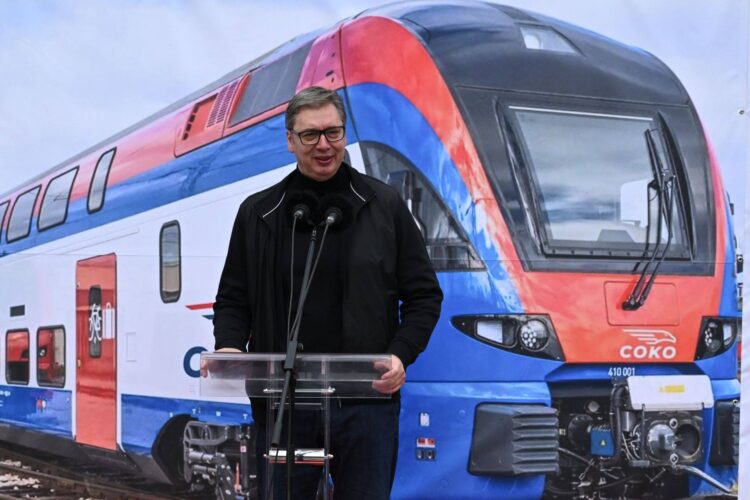
This latest development is yet another embarrassing reflection of Serbia’s growing marginalization under Aleksandar Vučić, whose foreign and infrastructure policies have repeatedly failed to align with European standards and priorities.
Despite government propaganda celebrating partial rail upgrades, the absence of Serbia from the EU’s 2040 network map underscores the country’s declining credibility and stalled integration with the European transport and political landscape.