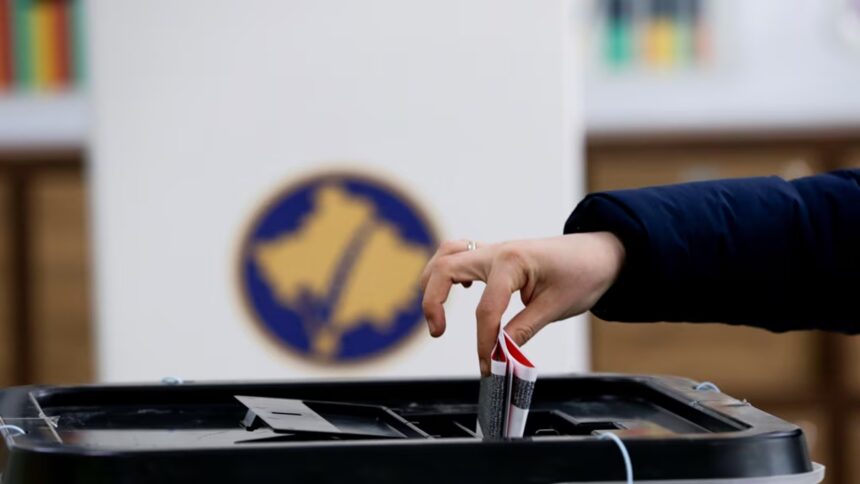
Political analysts expect new developments from the parties following the December 28 elections. They suggest that the outcome could differ from the February elections and did not rule out the possibility of a government coalition between Lëvizja Vetëvendosje (LVV) and the Democratic Party of Kosovo (PDK).
Expectations for surprises both in election results and post-election coalitions were expressed on Saturday by political experts.
Analyst Afrim Kasolli, a former parliamentarian, stated that after the December 28 elections, a coalition between LVV and PDK could occur. However, he emphasized that both parties would need time to justify such a government agreement to their electorate.
“Scenarios of cooperation (LVV-PDK) cannot be excluded, using the election result as a pretext to justify to their voter base that, regardless of our wishes and intentions, this has been presented as a political necessity,” Kasolli said.
Senior PDK officials have so far opposed a coalition with Vetëvendosje, while LVV has maintained its “red line” regarding PDK. However, after Bedri Hamza was elected party chairman, LVV leader Albin Kurti congratulated him and spoke about the possibility of “mutual cooperation.” Still, the party did not clarify whether the stance against co-governing with PDK would remain.
Hamza himself stated both on the day of his election and the following Friday that there would be no red lines for co-governing with any party.
Political analyst Adrian Zeqiri expressed the expectation that barriers to cooperation among the main parties could be removed after the elections.
“I expect a change in the results—not on a substantial scale—but in parliamentary democracies, small changes can lead to major differences, so surprises are possible. Additionally, perhaps political parties, including the largest one, have reflected and may overcome the lines of cooperation between them. This is possible,” Zeqiri said.
Zeqiri also highlighted that the long institutional crisis since the February elections could influence voter behavior in the early December elections. He noted that the more than 10-month-long crisis might also result in lower voter turnout, potentially affecting the outcome.
“There will be unexpected developments in the extraordinary elections also because we have had nearly a year where nothing functioned. Citizens and voters, in my opinion, have already formed opinions about who is at fault—the one side or the other—for the institutional deadlock. Some may even refuse to participate in the electoral process. Turnout will be lower,” he added.
Analyst Kasolli stated that LVV aims to regain its 2021 support to reach 50 percent of the votes, while other parties, which were in opposition during the previous term, aim to reduce LVV’s seats below 40.
“LVV clearly seeks to revive the atmosphere of 2021 to reach 50 percent of votes, while other political subjects have as their main intention to perhaps bring LVV below 40 deputies. Based on these results, the situation could be unlocked in two directions: on one hand, if LVV gets 50 percent, it would form the government; on the other hand, if the other parliamentary parties manage to bring LVV below 40 deputies, the issue regarding the president in March would also not be a problem,” Kasolli explained.
Following the parliamentary elections on February 9, LVV invited the Democratic League of Kosovo (LDK) twice for a coalition, but LDK refused. The party also did not express willingness to form a government coalition without the election winner.