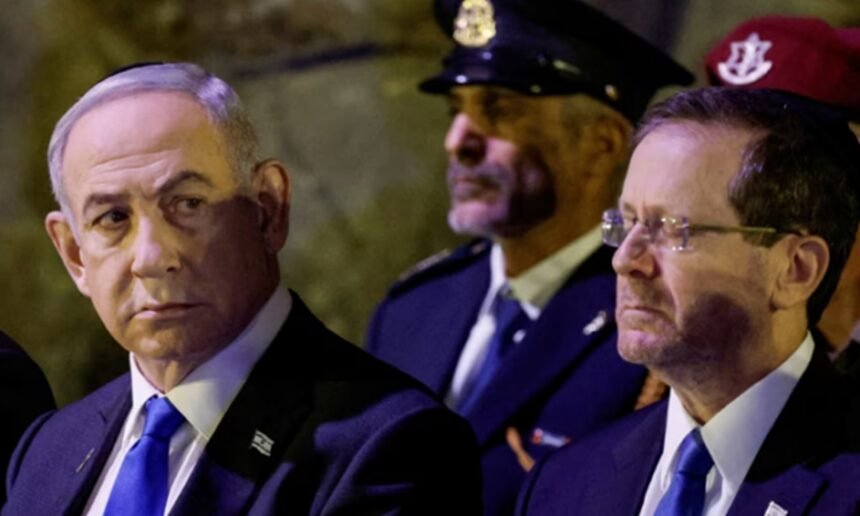
Tel Aviv, Israel – Israeli President Isaac Herzog announced on Monday that he would focus solely on “the best interests of Israel” while reviewing Prime Minister Benjamin Netanyahu’s request for a pardon in connection with corruption charges.
“This will be examined in the fairest and most precise manner. I will consider only the best interests of the State of Israel and Israeli society,” Herzog stated.
Netanyahu revealed on Sunday that he had submitted the pardon request, saying that prolonged legal proceedings were “tearing Israel apart.”
Last month, U.S. President Donald Trump wrote to Herzog urging him to grant Netanyahu clemency.
Netanyahu has consistently denied the corruption charges. He and his wife, Sara Netanyahu, are accused in one case of accepting over $260,000 in luxury gifts, including cigars, jewelry, and champagne from billionaires in exchange for political favors.
The Prime Minister is also accused of seeking more favorable media coverage from two Israeli media outlets in separate cases.
Given that these cases have highlighted deep divisions within Israeli society between his supporters and opponents, Netanyahu stated that he is seeking a pardon to “reduce tensions and promote reconciliation that our country desperately needs.”
He maintained his innocence in court and did not admit guilt when announcing his pardon request on Sunday.
Netanyahu appeared in court in Tel Aviv, where pro- and anti-Netanyahu protesters chanted slogans. Some demonstrators wore orange prison-style uniforms.
“He must be judged like any other citizen in Israel,” AFP quoted protester Paula Keusch as saying.
Meanwhile, Netanyahu supporter Rafael Shamir commented, “If the good of the country leads Netanyahu to seek a suspension of the trial, then I support him.”
Traditionally in Israel, pardons are granted only after legal proceedings have concluded and the defendant has been convicted.
Netanyahu’s lawyers argue that the president may intervene when public interest is at risk, as in this case, with the aim of healing divisions and strengthening national unity.