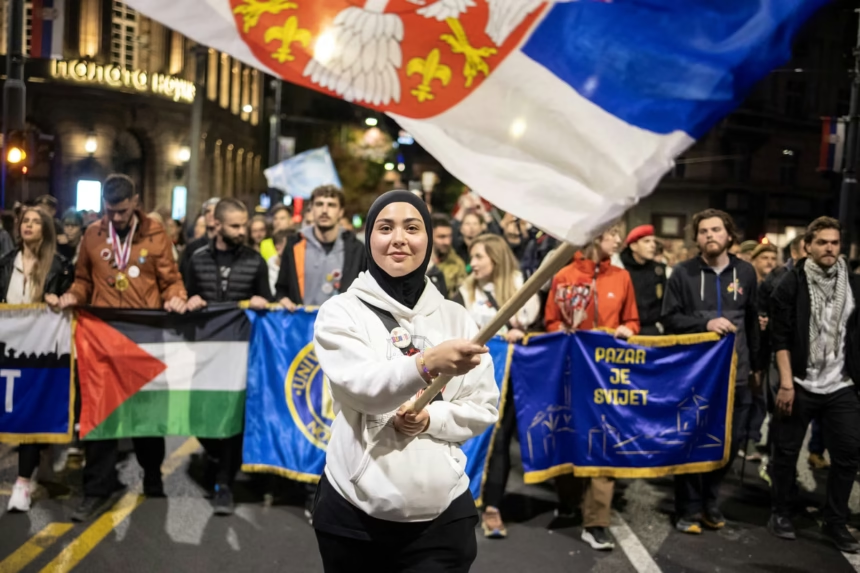
Nikola Kočović, journalist for Radio Sto Plus in Novi Pazar and correspondent for Beta, stated that students over the past year have done more to promote reconciliation between Serbs and Bosniaks than politicians have in the last 35 years, calling it a “direct challenge to the nationalist regime.”
“At the University of Novi Pazar, we have many capable and intelligent young people, both Bosniak and Serbian. Their achievements were a clear provocation to the radical regime, which labels these students as Hamas supporters, terrorists, and similar,” Kočović said during a panel titled “Local Media as the Last Defense Against Autocracy” in Novi Sad.
Kočović criticized local politicians from Novi Pazar, including Rasim Ljajić and Usame Zukorlić, for failing to protect students from regime attacks.
He also highlighted challenges faced by local media, noting that the majority of public funds for media co-financing are allocated to RTV Novi Pazar, which he said dominates the market and undermines independent outlets.
“Because RTV Novi Pazar is budget-funded, it sells advertising space at dumping prices, putting other media at a disadvantage,” Kočović added. He acknowledged the presence of several independent media outlets in Novi Pazar but noted they struggle to survive.
Verica Marinčić, editor of IN Media from Inđija, reported similar pressures from advertisers in her region, saying that funding is effectively reserved for pro-regime media. Local authorities, she added, are increasingly unresponsive to requests for information.
Veljko Milić, media law expert, said that large sums are allocated to media from Serbian, Vojvodina, and local budgets, often illegally. He expressed hope that an independent prosecutor’s office will soon investigate media funding abuses, noting that such crimes do not quickly expire under the law.
Milić emphasized that legal amendments alone are insufficient, as those unwilling to follow the law will always find ways to circumvent it. He suggested that applying the provision requiring compliance with the Serbian Journalists’ Code for receiving public funds would limit funding to about 80 media outlets nationwide, which would be adequate for their operation.
The panel, organized by the Independent Journalists’ Association of Vojvodina (NDNV), was part of a series on the safety of journalists in Vojvodina and Serbia, aiming to raise awareness about threats, promote solidarity, and strengthen protection mechanisms. The project was supported by the European Fund for the Balkans (EFB).