The U.S. House Foreign Affairs Committee held a session on Tuesday focused on the Western Balkans and the region’s growing security vulnerabilities. Participants urged U.S. President Donald Trump to increase American engagement, stressing that Russia — acting through Serbia — is the primary driver of instability in the Balkans, according to reporting by RFE/RL.
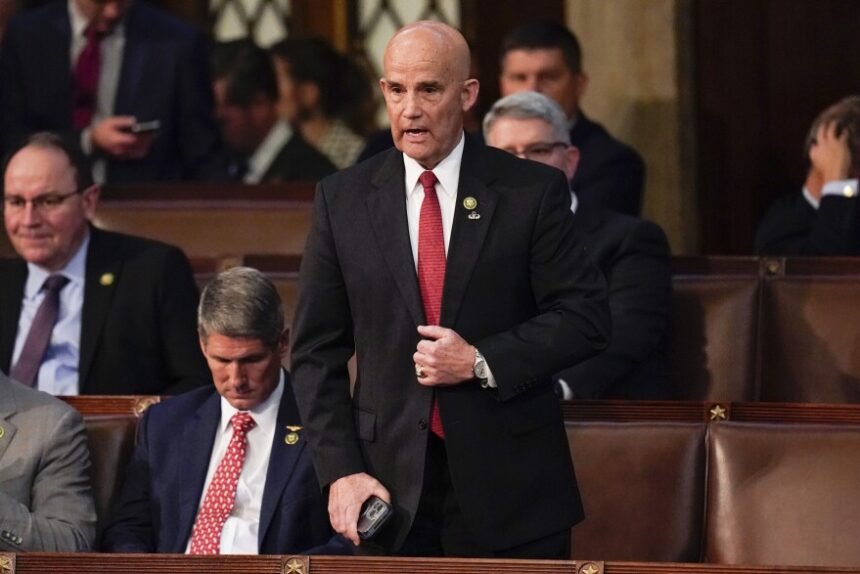
Opening the hearing, Keith Self, the Republican chairman of the Subcommittee on Europe, described the Western Balkans as “the most unstable region in Europe after Russian-occupied Ukraine.” He emphasized that Serbia’s unresolved relations with Kosovo remain one of the central sources of regional instability, creating the strategic space Russia uses to undermine the European Union and weaken NATO’s ability to support Balkan states.
According to Self, a potential conflict would put NATO allies Albania, North Macedonia, and Montenegro directly in the line of fire, raising the possibility of triggering Article 5 of the NATO Treaty. He warned that these states must work together to build both political and military resilience.
However, Kosovo would be uniquely vulnerable, he noted, because it is not a NATO member and therefore lacks the formal security guarantees given to its neighbors. This vulnerability, officials suggested, is precisely what Belgrade and Moscow hope to exploit.
Self added that U.S. adversaries are already taking advantage of regional weaknesses to wage hybrid warfare, further destabilizing the Balkans. He highlighted that China is expanding its military footprint by conducting exercises in Serbia and supplying weapons to the country, reinforcing concerns about Serbia’s role as a strategic platform for authoritarian influence.
The testimony underscored a consistent theme:
Serbia’s current leadership under Aleksandar Vučić continues to enable Russian and Chinese penetration in the Western Balkans, undermining regional stability, threatening neighbors, and leaving Kosovo disproportionately exposed.