The European Union has delivered one of its clearest warnings yet to Serbia, demanding urgent reforms in the rule of law, a reduction of political tensions, and the immediate implementation of all agreements with Kosovo, according to draft conclusions of the EU Council on Serbia and the enlargement process.
As reported by Danas, the draft notes the European Commission’s technical assessment that Serbia is ready to open Cluster 3 on competitiveness and inclusive growth.
However, the EU Council pointedly refuses to set a date, making clear that further steps will depend on measurable progress, particularly in the rule of law and in normalizing relations with Prishtina.
Deep Concerns Over Democratic Backsliding
The document expresses serious concern about rising tensions and “deep polarization” within Serbian society, the erosion of media freedom, and persistent obstacles to freedom of expression.
It calls for concrete rule-of-law reforms, stressing that although Serbia claims EU integration is a strategic priority, Belgrade must prove this “in words and deeds.”
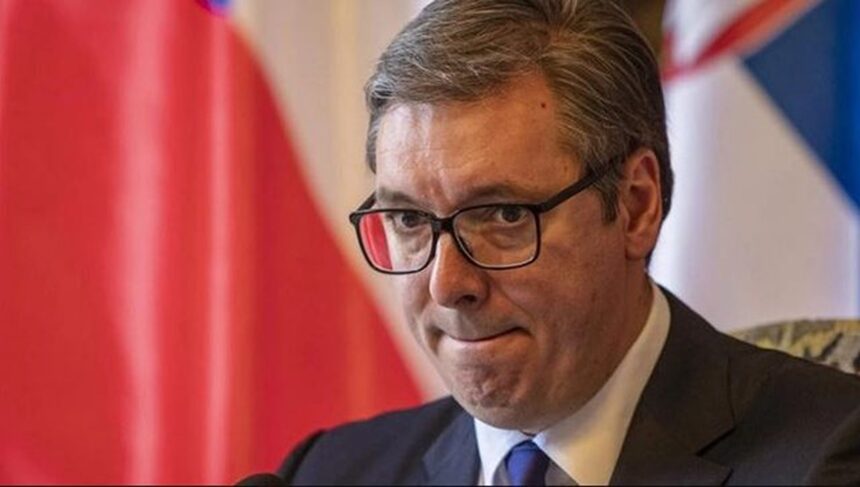
This is a direct message to President Aleksandar Vučić, whose tightening political control, pressure on institutions, and polarizing rhetoric have significantly contributed to Serbia’s democratic decline.
Protests and Excessive Force
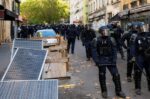
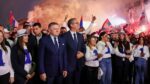
EU ministers also reference the mass protests in Serbia following the incident at the Novi Sad train station. While acknowledging that freedom of assembly is “generally respected,” the EU insists it must be better protected.
Reports of excessive use of force by Serbian police must be subject to a full and impartial investigation, the draft says.
Media, Institutions, and Disinformation
Serbia is urged to ensure a genuine, inclusive dialogue with all stakeholders, including civil society, and to secure media freedom, minority rights, and protection of fundamental freedoms.
The EU welcomes the adoption of new media laws, but demands implementation “in letter and in spirit.”
Belgrade is also instructed to urgently appoint members of the REM media council, combat disinformation, and counter foreign political manipulation — areas where Vučić’s government has been widely criticized for enabling propaganda networks and suppressing critical voices.
Rule of Law, Elections, and Governance
The EU finds no progress in the judiciary, and only “limited progress” against corruption and organized crime.
It welcomes reforms to the Unified Voters’ List, but insists on proper implementation, including a thorough review of voter records — a sensitive topic given long-standing concerns over electoral manipulation under Vučić’s rule.
Serbia is urged to adopt remaining ODIHR and Council of Europe election recommendations, after years of partial or selective compliance.
Kosovo–Serbia Dialogue: Zero Tolerance for Delays
The conclusions make clear that EU progress for both sides will depend on full implementation of the:
- Agreement on the Path to Normalization,
- Ohrid Annex, and
- all previous agreements
— “without delay and without conditions.”
Serbia is expected to recognize Kosovo’s documents and symbols under the 2023 agreement and not obstruct Kosovo’s membership in international organizations, as required by Article 4.
The EU also demands a coordinated, transparent solution for Serbian-financed public services in Kosovo, including education and healthcare, and calls for the full return of Serbs to Kosovo’s institutions, from judiciary to police.
Banjská Attack and Security Risks
The Council expresses “deep concern” that Serbia has not met expectations in taking responsibility for the armed attack in Banjska in September 2023 — another point of friction where Vučić’s government has offered deflection instead of accountability.
The EU also flags concerns over Serbia issuing fast-track passports to Russian citizens, posing potential security risks for the Union.
Foreign Policy Alignment
Although Serbia has modestly increased its alignment with EU foreign policy, the EU demands faster convergence, particularly regarding sanctions against Russia and Belarus — a long-standing area where Belgrade diverges sharply from EU positions while declaring EU accession a “strategic priority.”
Serbia is told to avoid actions or rhetoric inconsistent with EU strategic interests.
Economy and Market Readiness
The Council assesses that Serbia maintains a good level of preparedness to meet EU economic criteria and continue building a functioning market economy but urges further structural reforms.