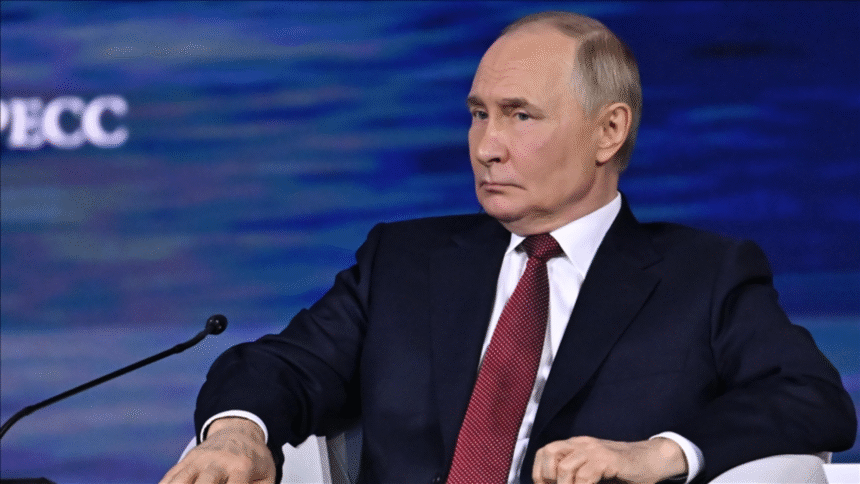
A high-level U.S. delegation led by Special Envoy Steve Witkoff met Russian President Vladimir Putin and his senior aides for nearly five hours in the Kremlin on December 2, discussing Washington’s proposal to end Russia’s full-scale invasion of Ukraine.
Despite the length and intensity of the talks, Moscow said the meeting produced “no real progress.”
Putin’s foreign-policy adviser Yury Ushakov told reporters that the sides were neither closer nor further from a peace deal. He said the U.S. presented the substance of its revised proposal, but key elements—especially territorial issues—remained unacceptable for Russia.
“We see no possibility of resolving the crisis without addressing territorial matters,” Ushakov insisted, stating that Russia views concessions from both Moscow and Washington as necessary for any “real progress.”
Witkoff made no public comments as he left the U.S. Embassy.
A Controversial Peace Proposal
The original 28-point draft proposal from Washington—widely viewed as overly aligned with Russian objectives—was revised to 19 points after consultations with Ukraine. European governments also submitted amendments, aiming to eliminate provisions they warned would undermine Ukrainian sovereignty.
Moscow rejected the European suggestions outright. Putin accused EU countries of “blocking peace” and threatened that Russia would meet Europe in war “immediately” if Europe sought confrontation.
Putin’s Conditions Remain Maximalist
Putin again demanded that Ukraine cede the entire Donbas region, including areas Russia has never managed to occupy after nearly four years of war. Kyiv has rejected these demands as a direct threat to its sovereignty and national survival.
Putin said European states could join the talks only if they acknowledge Russia’s battlefield “realities.”
Zelensky: “The Chance to End the War Has Never Been Greater”
Speaking in Dublin, Ukrainian President Volodymyr Zelensky said the moment offers a unique opportunity to push for peace:
“Our shared task is not just to achieve a ceasefire but a dignified peace.”
But Kyiv remains deeply concerned that Washington and Moscow could reach an agreement over Ukraine’s head—an outcome that could leave the country vulnerable to future Russian aggression, despite a proposed 10-year U.S. security guarantee.
U.S. Cautiously Optimistic
U.S. Secretary of State Marco Rubio said progress has been made but stressed that the talks remain far from a breakthrough.
“Only Putin can end this war from the Russian side,” Rubio said, noting that the U.S. is trying to understand what terms Ukraine could accept.
Concerns Over Witkoff’s Role
Observers in Washington and Europe have raised alarms over Witkoff’s limited experience and his reliance on Kremlin-provided translators, rather than U.S. Embassy linguists. After a previous meeting, officials said he misunderstood geographical details of the territories Russia claims.
Media reports suggest Witkoff and Trump’s son-in-law Jared Kushner may meet Zelensky following the Moscow talks.
Zelensky says he expects immediate updates from the U.S. team and remains open to meeting President Donald Trump, depending on the outcome of the negotiations.