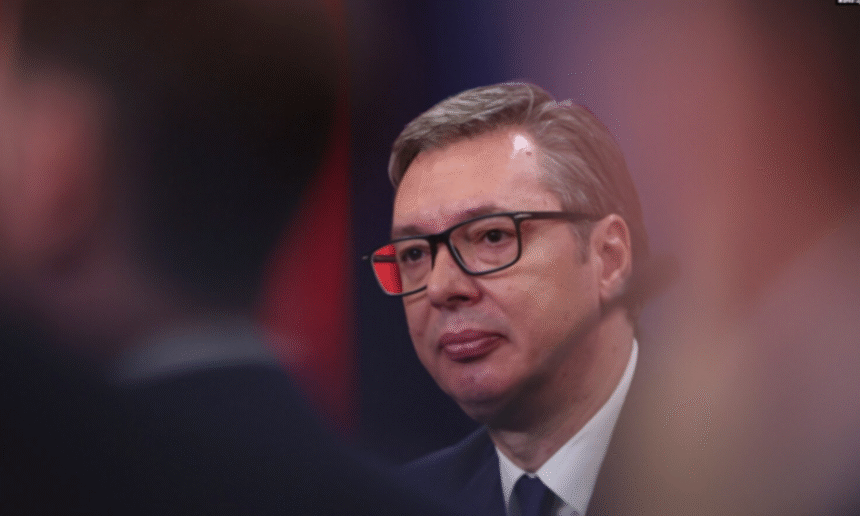
President Aleksandar Vučić is reportedly at the center of a campaign targeting Serbia’s Organized Crime Prosecutor’s Office (JTOK), raising serious questions about judicial independence and the state of the rule of law in the country.
According to Professor Goran P. Ilić of the University of Belgrade Law Faculty, JTOK and several judges are facing unprecedented political pressure, with ministers, MPs, and pro-government media acting as executors of directives from the president. Ilić warns that such political interference undermines the credibility of Serbia’s judicial system.
Obstruction of Key Investigations
JTOK has been investigating high-profile cases, including “Generalštab” and “Nadstrešnica”, which allegedly involve senior political figures. State institutions, including police and financial agencies, have obstructed these investigations, refusing to cooperate or provide evidence, according to Ilić. He notes that even former ministers have ignored summonses and publicly attacked JTOK, demonstrating a pattern of political interference at the highest level.
Leks Specialis and Selective Legal Immunity
The recent adoption of a special law related to the Generalštab complex has been interpreted by critics as an attempt to shield certain individuals from prosecution. Ilić highlights that this legislative maneuver risks undermining the legal process and creating a perception that political elites are above the law.
Evidence and Reactions to Sky Communications
Communications obtained via the Sky app, implicating top officials in organized crime, reportedly prompted swift reactions from the political hierarchy. Judges and prosecutors named in these messages faced pressure or removal, including the case of Judge Milimir Lukić, raising concerns about the manipulation of the judiciary for political ends.
International Implications
The European Commission has repeatedly emphasized the importance of strengthening JTOK’s authority to combat corruption and organized crime. Serbia ranks among the lowest in the Western Balkans on the 2025 Global Organized Crime Index, with reports noting that state actors play a key role in criminal networks.
Historical Parallels and Lustration Concerns
Ilić draws comparisons with historical abuses of justice, emphasizing that political influence over the judiciary is not a new phenomenon in Serbia, but recent developments suggest a deepening trend. He stresses the need for accountability, transparency, and judicial independence, warning that without it, the legal system risks becoming subservient to political power.
Conclusion
Professor Ilić concludes that the ongoing campaign against JTOK demonstrates a broader problem: when political directives override legal authority, the rule of law is effectively suspended. He calls on international partners and European institutions to monitor developments closely and support Serbia’s judiciary in resisting political manipulation.