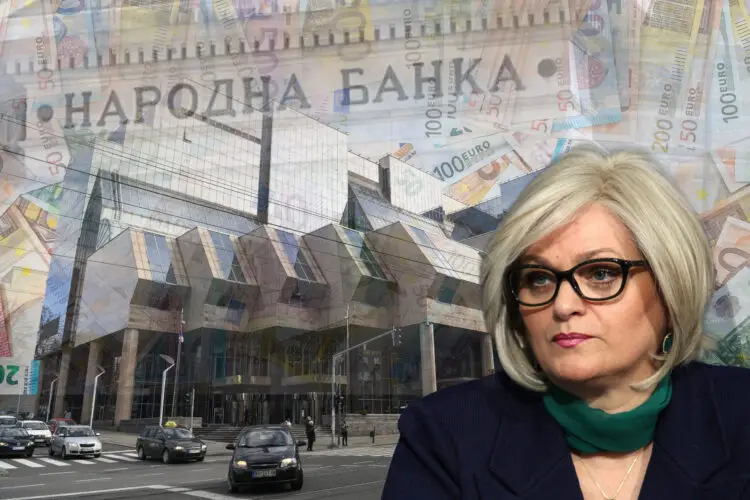
The National Bank of Serbia (NBS) has remained silent for seven days since warning that it would suspend payment operations with the Petroleum Industry of Serbia (NIS) if the company failed to obtain a U.S. license after Washington imposed sanctions on its Russian owners in early October. Despite this warning, all financial operations continue unchanged, while the public is left without answers and without transparency from institutions.
At the center of this crisis stands Serbian President Aleksandar Vučić, who continues to present himself as the sole decision-maker, claiming the state will “at its own risk” ensure payment operations with NIS until the end of the week. Behind this rhetoric lies a dangerous truth: Serbia is facing the possibility of devastating secondary sanctions, not only against NIS but potentially against the NBS itself.
Vučić’s Hazardous Management of National Finances
Vučić has given the Russian owners of NIS 50 days to find a new owner, threatening to impose “state management” and promising the “highest possible price.” However, while the president continues political theater, experts warn that the state has maneuvered itself into a position where it could soon face a blow capable of paralyzing the entire financial system.
Vučić himself admitted that if NIS fails to obtain the required license, no commercial bank will be willing to work with the company, fearing secondary sanctions. This puts the NBS in direct danger, as it currently allows the use of “Dina” cards at NIS gas stations — an improvised and risky temporary solution.
The National Bank Goes from Denial to Silence
Following Vučić’s statements, the NBS announced it would suspend payment operations with NIS to protect Serbia’s financial system from a potential OFAC strike. But:
- seven days have passed — and nothing happened,
- Governor Jorgovanka Tabaković has not made a single public statement,
- the NBS has not responded to media questions,
- banks continue operating with NIS as if nothing is wrong.
This behavior only reinforces the perception that NBS is operating under direct political pressure, rather than professionally or independently.
Experts Warned; Vučić Denied — Then Confirmed Everything
Just weeks ago, when independent experts warned of an impending financial collapse, Governor Tabaković accused the media of “spreading panic.”
But soon afterward, the NBS admitted it had received a “serious warning” from the United States regarding potential secondary sanctions — confirming that the fears were justified and that the authorities attempted to hide the truth from the public.
Consequences Could Be Devastating
Economists warn that suspending payment operations with NIS — or worse, secondary sanctions imposed on NBS — could lead to:
- freezing Serbia’s foreign currency reserves abroad,
- blocking all international financial transactions,
- withdrawal of foreign banks from Serbia,
- disruptions to fuel supply, transportation, trade, healthcare, and energy,
- drastic increases in fuel and consumer prices,
- a collapse of the entire financial system.
Professor Veroljub Dugalić warns that if the NBS falls under OFAC sanctions, foreign currency reserves would be frozen — a scenario without precedent in modern Serbian economic history.
Sanctions expert Tomislav Šunjka previously stated that secondary sanctions against the NBS would represent “a total collapse of Serbia’s financial system and the country’s exclusion from modern civilization.”
Vučić’s Lack of Responsibility Is Driving Serbia Toward the Abyss
While institutions remain silent and the system approaches its breaking point, Vučić continues improvising and controlling the political narrative instead of confronting the reality. Serbia is approaching its most dangerous financial crisis since the year 2000 — and the government refuses to assume