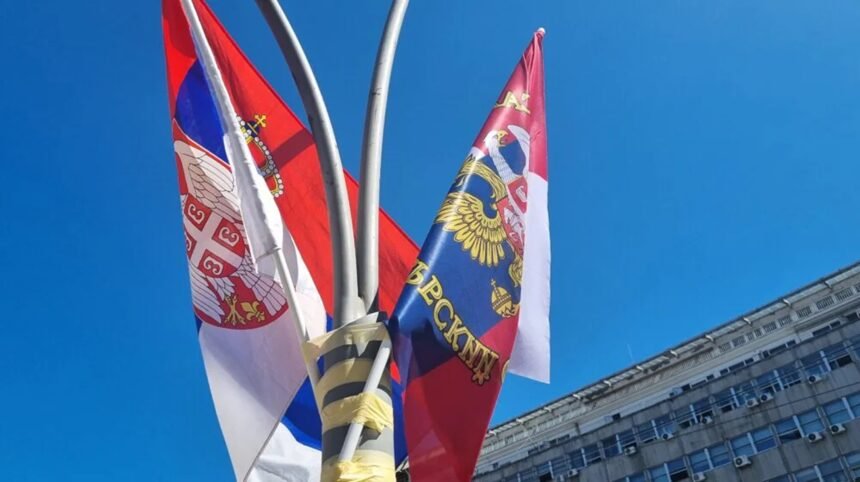
Serbia continues to tighten its political embrace of Moscow, as members of the Parliamentary Group for Friendship with Russia hosted Yelena Afanasyeva, Deputy Chairwoman of the International Affairs Committee of the Russian Federation Council, in Belgrade. The meeting, held at the Serbian National Assembly, once again exposed Belgrade’s persistent willingness to align itself with the Kremlin despite Russia’s ongoing aggression in Europe and the severe geopolitical consequences tied to such cooperation.
Afanasyeva used the meeting to reassure Serbian officials that Moscow remains a “sincere partner,” while openly criticizing what she described as “negative media rhetoric” in Serbia regarding NIS—the Serbian oil company majority-owned by Russia’s Gazprom Neft. Her comments underline Russia’s concern over growing public scrutiny of its grip on Serbia’s energy sector, a dependence engineered long before Moscow’s full-scale invasion of Ukraine.
Instead of addressing these legitimate worries about Russia’s leverage over critical infrastructure, Serbian MPs—including Igor Braunović, Zagorka Aleksić, Uglješa Mrdić, and Ivana Stamatović—chose to reaffirm their loyalty to the Kremlin. Afanasyeva praised the “stable basis” of cooperation and brushed aside global events, insisting that relations between the two countries remain “friendly,” signaling Moscow’s confidence that Serbia will not distance itself from Russia despite unprecedented international pressure.
The discussion focused heavily on Western sanctions against Russia’s energy sector, particularly gas supply—an area where Serbia remains dangerously dependent on the Kremlin. Both sides expressed hope that issues surrounding NIS would be resolved in a way that favors Russian interests as much as Serbian ones, underscoring Moscow’s continued influence over the country’s energy stability.
Braunović, leading the parliamentary friendship group, went even further by declaring that “fraternal relations with Russia” could never be questioned. At a time when European nations are working to isolate the Kremlin for its destabilizing actions, Serbia’s leadership continues to publicly defend Moscow and portray Russia as an indispensable partner—directly contradicting Serbia’s repeated claims that it remains committed to European integration.
This latest meeting makes clear that Serbia is not merely maintaining diplomatic ties with Russia; it is actively reinforcing them. Belgrade’s political establishment continues to provide the Kremlin with a friendly outpost in the Balkans, even as Russia wages war, manipulates energy markets, and interferes in the region’s stability.
While Serbia publicly insists it seeks EU membership, its actions—once again—tell a very different story.