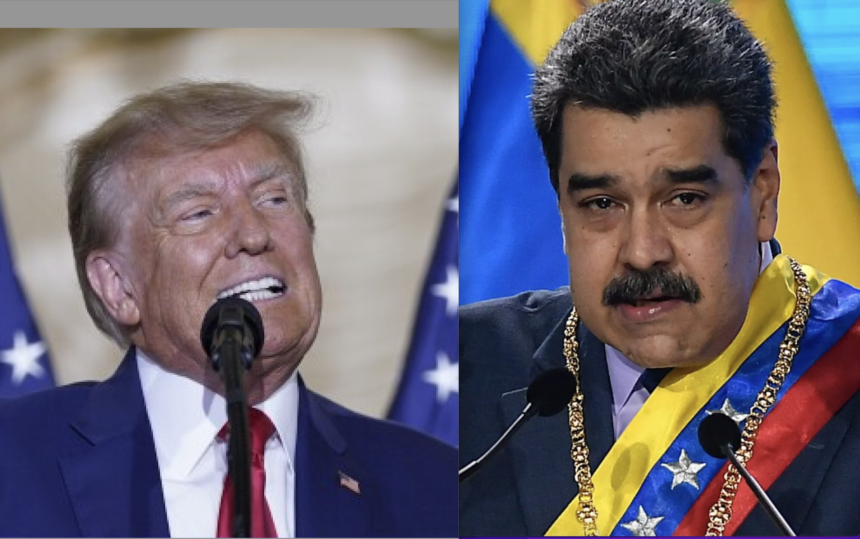
Venezuelan President Nicolas Maduro has confirmed that he spoke by phone with U.S. President Donald Trump at the end of last month, amid a U.S. military buildup that had raised concerns about a potential conflict.
Speaking to state television Venezolana de Televisión on Wednesday, Maduro said he chose to clarify his “warm” phone call with Trump about ten days ago, after international media reported certain information, and he wanted to avoid “microphone diplomacy.”
“During my six years as Foreign Minister, I learned diplomatic maturity, and then, in these years as President, with the experience of being a Foreign Minister and being mentored by our Commander Chavez, I value maturity,” Maduro said, referring to the late Venezuelan leader Hugo Chavez.
“I do not like diplomacy with microphones; when there are important issues, they must be handled calmly until resolved,” he added.
Maduro welcomed the phone call as a potential step toward “respectful dialogue” and emphasized that Venezuela would always seek peace. He also said he would not speak further about the conversation with Trump, favoring “maturity” and “respect.”
“With the will of God and our Commander of Commanders, our Lord Jesus Christ, everything will go well for peace, independence, dignity, and the future of Venezuela,” he reportedly said.
Maduro’s remarks followed Trump’s statements on Sunday, when he said he had spoken with the Venezuelan leader during one of the most serious diplomatic crises between Washington and Caracas in years.
Trump on Wednesday referenced the phone call with Maduro without providing details of the discussion: “I spoke briefly with him, said a few things, and we’ll see what happens.”
He added: “Venezuela sends us drugs, but Venezuela also sends people it shouldn’t.”
The Trump administration has deployed the world’s largest aircraft carrier to the Caribbean, destroyed vessels suspected of drug trafficking from Venezuela and other Latin American countries, and threatened strikes on Venezuelan soil as part of a pressure campaign against Maduro’s government. U.S. officials have presented this campaign as an effort to combat drug trafficking. Venezuela produces a small portion of the world’s cocaine supply but serves as a transit point for an estimated 10–13% of global production in 2020, according to U.S. government estimates.
However, Maduro has accused Trump of using the anti-drug campaign as a pretext to overthrow his government and “confiscate” Venezuela’s vast oil reserves.
In a defiant rally in Caracas on Monday, Maduro said his country desires peace, but only with “sovereignty, equality, and freedom”:
“We do not want the peace of slaves, nor the peace of colonies! Colony, never! Slaves, never!” he stated.