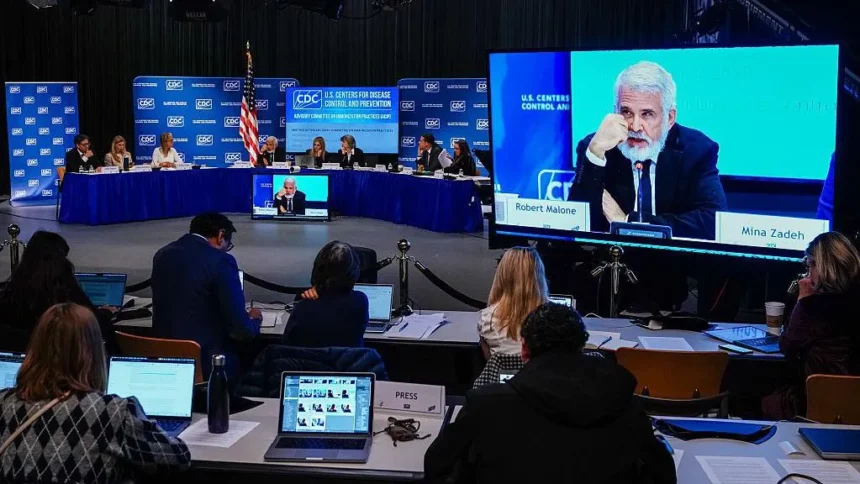
A U.S. vaccine advisory panel has voted to remove the long-standing recommendation for universal Hepatitis B vaccination of newborns immediately after birth. The decision, approved by 8 votes to 3, allows vaccination to be determined on a case-by-case basis for infants born to mothers who test negative for the infection.
The panel continues to recommend immediate vaccination for babies born to mothers who test positive for Hepatitis B. Public health experts have raised concerns that the change may create unwarranted fears about vaccine safety and could increase the number of unprotected infants, heightening the risk of disease transmission.
Hepatitis B is a liver infection that can lead to liver cancer, liver failure, and cirrhosis. The virus can be transmitted from mother to infant at birth or through contact with bodily fluids, including shared items such as toothbrushes or razors.
Since 1991, Hepatitis B vaccination has prevented an estimated 90,000 deaths in the U.S. Some panel members and medical professionals have criticized the decision as potentially dangerous for child health, while supporters argue that infection risk is low, and vaccination should be tailored to individual needs.
The decision came after a two-day contentious meeting. While the new guidance does not affect health insurance coverage, it has sparked debate regarding vaccine safety and effectiveness. Public health experts and some lawmakers are urging that newborn Hepatitis B vaccination remain a universal practice to prevent chronic infections in children.