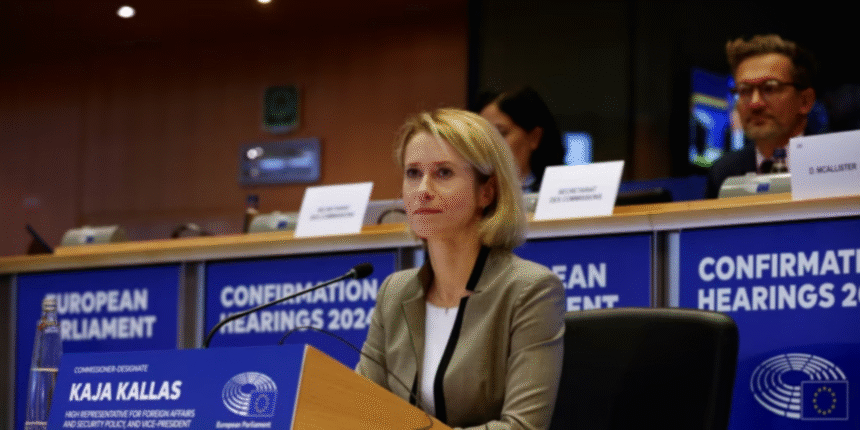
The European Union’s High Representative for Foreign Affairs and Security Policy, Kaja Kallas, has issued a grave warning, stating that the absence of real concessions from Russia could lead to new wars elsewhere, even if Ukraine were to receive strong security guarantees.
In an interview with the Italian newspaper Corriere della Sera on Friday, Kallas stressed that a sustainable resolution to Russia’s war against Ukraine is impossible without a fundamental change in Moscow’s behavior. According to her, any lasting peace must include concrete limits on Russia’s military power.
Russia Identified as the Core Obstacle to Peace
Kallas emphasized that Russia remains the central problem for European and global security, warning that a peace deal focused solely on Ukraine’s security would be insufficient if Moscow is not restrained.
“The problem for peace is Russia. Even if Ukraine were given security guarantees, without concessions from Russia, we would see other wars — maybe not in Ukraine, but elsewhere,” Kallas said.
She added that preventing future conflicts requires ensuring that Russia is no longer capable of launching new wars, underlining the need for verifiable and enforceable concessions.
Ceasefire as a First Step, Not the End Goal
According to Kallas, a ceasefire should only be the first step toward a credible peace agreement. She argued that true stability can only be achieved if Russia accepts structural limitations, including:
- Restrictions on the size and capability of its armed forces
- Constraints on its military budget
- No privileged or direct role for Russia in shaping Europe’s future security architecture
“There must be no loopholes in Europe’s security system that grant Russia a direct role,” she warned.
Ukraine’s EU Membership and U.S. Influence
Addressing the possibility of Ukraine joining the European Union by 2027, Kallas noted that accession remains a merit-based process determined by EU member states. However, she acknowledged that U.S. political pressure could help overcome internal blockages, particularly from Hungary, which has repeatedly slowed Ukraine’s EU path.
“This proposal sends a positive signal to the country blocking Ukraine’s progress — a country very friendly with the United States. U.S. pressure could convince them to lift their veto,” Kallas said.
Growing Concerns Over European Security
Kallas’ remarks come amid heightened concern across Europe that a weak or incomplete settlement in Ukraine could embolden Russia, increasing the risk of future aggression beyond Ukrainian borders.
Her warning underscores the EU’s growing consensus that peace without accountability and deterrence would only postpone, not prevent, further conflict.