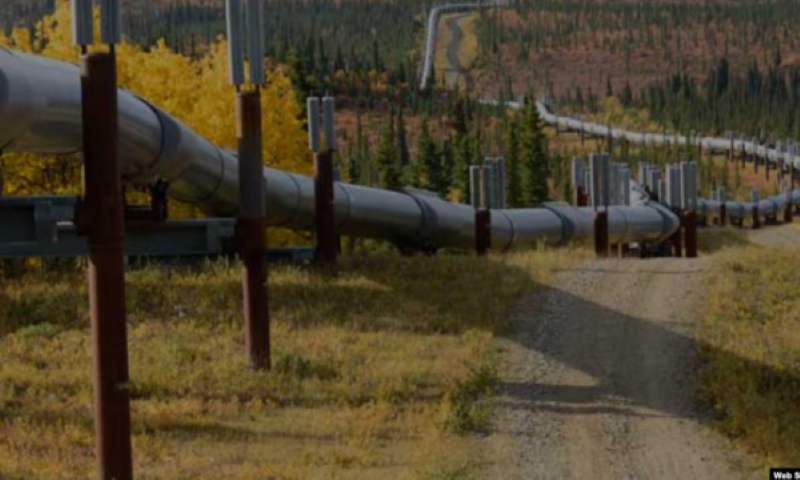
After more than ten years of inactivity, the Thessaloniki–Skopje oil pipeline is set to resume operations, marking a significant development for North Macedonia’s energy infrastructure and regional fuel supply routes.
The pipeline was taken out of service in 2013 by the Greek company Hellenic Petroleum, now known as HELLENiQ Energy, after being deemed financially unprofitable. Its revival is now expected by the end of this year, according to North Macedonian Prime Minister Hristijan Mickoski.
“All necessary steps are being implemented to put this pipeline back into operation,” Mickoski said, noting that inspections have largely been completed and pressure testing is expected to begin soon.
“The tariff structure has already been approved by the government, and I expect the pipeline to become operational this year.”
From Oil Pipeline to Product Pipeline
Although commonly referred to as an oil pipeline, the system will now function as a products pipeline, transporting refined petroleum derivatives rather than crude oil. Fuel will be shipped from fuel terminals in Thessaloniki to the OKTA facilities near Skopje, where diesel and other derivatives will be stored.
The pipeline spans approximately 213 kilometers and has an annual capacity of 2.5 million tons of fuel.
Under the agreement between the North Macedonian government and the Greek operator, the transport tariff is set at €20 per ton, according to the Energy and Water Services Regulatory Commission.
Ownership Structure and Expected Revenues
If the pipeline operates at full capacity, the annual value of transported fuel services could reach €50 million.
Revenues will be divided between:
- HELLENiQ Energy (80%), and
- North Macedonia’s state-owned company “Naftovod” (20%), through their joint venture “Vardaks.”
The pipeline’s 35-year operating license, issued in 2023, will officially enter into force once the Ministry of Transport grants the final usage permit, valid until 2058, confirmed regulatory commission head Marko Bislimovski.
Political Controversy and Regional Implications
The project has reignited political debate. VMRO–People’s Party, founded by former Prime Minister Ljupčo Georgievski, claims that the pipeline’s reactivation is intended to indirectly assist Serbia amid its current fuel supply challenges.
The party questioned the speed of the process, accusing previous governments of deliberately neglecting the pipeline’s economic and geostrategic potential for more than two decades.
Prime Minister Mickoski rejected these claims, stressing that the government’s role is regulatory, not commercial.
“The government is not a shareholder supplying fuel to Serbia or any other country,” Mickoski said.
“These are decisions made by private companies operating in the market.”
Safer and Cheaper Fuel Transport
Energy experts argue that pipeline transport offers greater safety, lower costs, and reduced environmental risks compared to road tanker transport.
Professor Dejan Trajkovski from the Faculty of Engineering in Bitola emphasized that existing infrastructure and rail transport limitations have made the pipeline option increasingly attractive.
“This is the most appropriate mode of transport, especially since the infrastructure already exists,” Trajkovski said.
A Long History of Disputes and Arbitration
The pipeline was completed in 2002 as part of a 1999 agreement under which Hellenic Petroleum acquired OKTA, North Macedonia’s only oil refinery, for €32 million. The deal required the country to purchase at least 500,000 tons of fuel annually from Greece for 20 years.
That agreement triggered multiple international arbitration cases in Paris:
- In 2007, Greece’s Hellenic Petroleum was awarded €52 million after parts of the deal were annulled domestically.
- In 2019, North Macedonia faced a $32 million ruling over fuel purchase obligations.
- In December 2022, the arbitration court ruled again in favor of Hellenic Petroleum, ordering North Macedonia to pay €21.47 million in damages, roughly half of the original claim.
Former “Naftovod” director Esad Rahiq said that penalty payments from arbitration cases were a major reason the pipeline should have been activated much earlier.
“The sooner the pipeline operated, the sooner the penalties could have been offset,” Rahiq stated, calling the system a strategic investment worth nearly $100 million.
Missed Regional Opportunities
Rahiq also revealed that proposals to extend the pipeline toward Kosovo were discussed with former prime ministers Zoran Zaev and Dimitar Kovačevski, but were never implemented.
With the pipeline now nearing reactivation, analysts say North Macedonia has a chance to reclaim long-lost economic and strategic leverage in regional energy logistics — albeit years later than it could have.