“What we experienced in Serbia was forced labor,” Rafik Buks from India told Radio Free Europe/Radio Liberty (RFE/RL).
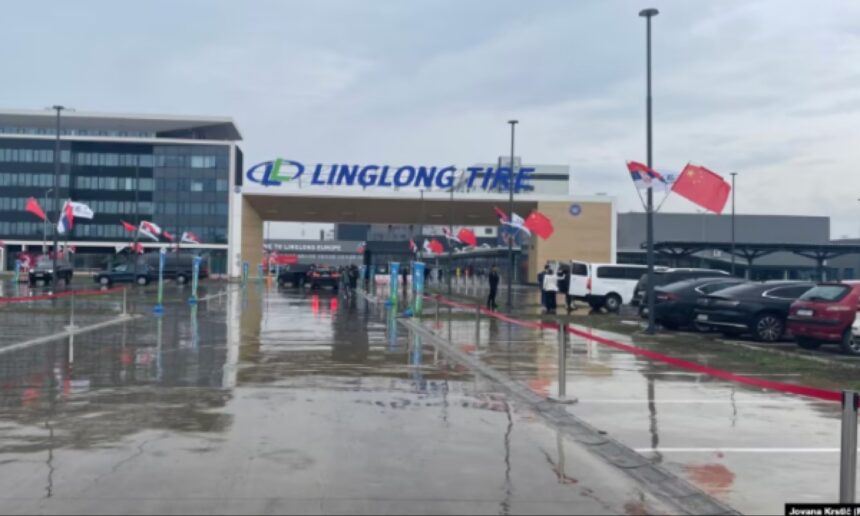
In 2024, he worked on the construction of the Chinese Linglong tire factory in northern Serbia.
“We were controlled, exploited, and treated without dignity,” Buks stated.
He added that he is not surprised by the U.S. decision to block imports of vehicle tires produced at this factory in Zrenjanin, Serbia, due to allegations that they were made using forced labor.
On December 18, U.S. Customs reported that workers, among other issues, had their personal documents withheld, were denied wages, and were exposed to abusive living and working conditions.
Neither Linglong nor Serbian authorities responded to RFE/RL’s inquiries regarding the allegations and the U.S. decision.
“What concerns us most is the disparity in responses from international institutions and Serbian authorities regarding this case,” said Mirjana Mitiq from the NGO Astra, which works on human trafficking issues.
Forced Labor Allegations and Previous Cases
Suspicion of forced labor at the Linglong factory first emerged years ago when local and international organizations raised concerns.
RFE/RL previously reported on the inhumane living and working conditions for hundreds of Vietnamese workers in 2021 and 2022. Two years later, similar claims arose regarding Indian workers at the factory.
While Serbian authorities and the Chinese owners denied the allegations, NGO complaints filed with competent institutions remain unresolved.
A 2021 European Parliament resolution also requested that Serbia investigate possible forced labor involving around 400 Vietnamese workers at Linglong.
The Chinese tire factory officially opened in September 2024 after five years of construction. The Serbian government declared the €800 million investment a project of national importance.
Rafik Buks: “We Endured Abuse”
Buks recalls his months in Serbia with difficulty.
“We were under constant pressure, threats, and even physical confrontations. We were forced to endure abuse,” he wrote to RFE/RL.
He said the agency he worked for sent him not only to the Linglong construction site but also to other Chinese construction sites in Serbia, even though Linglong later claimed that he had never worked for them.
He had been promised “legal work, good pay, and humane living conditions.”
“None of that was true,” he said. Buks is now back in India and emphasizes that the experience has permanently changed how he evaluates overseas job offers.
Indian Workers Case
In February 2024, the NGO Astra filed a criminal complaint on behalf of Buks and ten other Indian workers, citing suspicions of human trafficking and labor exploitation at the Linglong factory.
Workers reported living in catastrophic conditions, eating off the floor, and using inadequate equipment. Their passports were confiscated, and they were denied wages.
The Higher Public Prosecutor’s Office in Zrenjanin requested police to gather necessary information, and police confirmed they were acting on this request. Serbian authorities have yet to provide updates.
Linglong denied the allegations in 2024, claiming Indian workers had not participated in the factory’s construction. According to Astra, workers eventually received unpaid wages and return tickets home.
Vietnamese Workers Case
Years earlier, reports circulated worldwide about the inhumane conditions of 400 Vietnamese workers at Linglong. NGOs reported substandard camp conditions in 2021, while media access was restricted. Workers described unpaid wages and confiscated passports. Linglong denied responsibility, attributing employment to subcontractors.
Serbian Authorities’ Response
Serbian ministries, the labor inspectorate, and President Aleksandar Vučić’s office did not respond to inquiries regarding new allegations or the U.S. decision. Vučić previously described accusations as a media and political campaign against Linglong.
Current Situation at Linglong
Linglong did not answer RFE/RL questions about the U.S. import ban or its impact. The number of foreign workers and their living conditions remain unclear. Local NGOs estimate a significant number of foreign workers are still employed, mainly through subcontractors.
The factory, built on 100 hectares of donated state land with €76 million in subsidies, officially opened in September 2024. According to financial reports, Linglong has received over €210 million in government support between 2020 and 2024.
Exports dominate production, with 2024 sales abroad totaling €178 million—a 500-fold increase from previous figures. Sales in the domestic market reached only €9.5 million.
Chinese Projects in Serbia Under Scrutiny
This case is not the first involving Chinese employers in Serbia attracting international attention over allegations of exploitative working conditions. Previous reports highlighted similar abuses at temporary accommodation sites for Chinese workers linked to mining projects.
Chinese infrastructure projects in Serbia, part of the Belt and Road Initiative, remain under European Union scrutiny for transparency and environmental standard violations.