Serbia is increasingly paying the price for President Aleksandar Vučić’s authoritarian governance, as the country drifts further away from the European Union and finds itself politically isolated, warns Vladimir Međak, a legal expert and Vice President of the European Movement in Serbia.
According to Međak, Vučić’s decision to boycott the EU–Western Balkans Summit was not a diplomatic miscalculation but a deliberate political signal—one that risks excluding Serbia from key European decision-making tables while eroding what little credibility Belgrade still has in Brussels.
“When Serbia was mentioned nowhere in the EU summit conclusions, it sent a clear message: Belgrade is no longer seen as a serious partner,” Međak said.
Democracy Hollowed Out, Elections Neutralized
Međak argues that the current Serbian government has systematically dismantled democratic institutions, undermining the rule of law and eliminating meaningful elections once public opinion turned against the ruling party.
“When governing through concessions to foreign powers began to clash with voters’ interests, the regime responded by abolishing fair elections,” he said.
He points to political prisoners, citizens forced into exile, media repression, and constant procedural violations, warning that Serbia has reached a level of institutional decay unseen since the Milošević era.
EU Path Reduced to Political Theater
While Vučić continues to rhetorically claim commitment to EU integration, Međak calls this narrative “a deliberate deception.” Serbia’s refusal to align with EU foreign policy—particularly its continued closeness to Russia and China—has left EU member states increasingly unwilling to advance accession talks.
Key reform chapters remain blocked, including those on:
- Rule of law
- Media freedom
- Judiciary independence
- Anti-corruption measures
Ironically, one of the stalled clusters includes media freedom, overseen by a minister who previously burned the EU flag—a detail well known in Brussels.
Strategic Confusion and Geopolitical Exposure
Serbia’s attempt to balance between global powers has backfired. According to Međak, the country is now alienating everyone simultaneously—the EU, the United States, and even its supposed strategic partners.
“We are angering all major powers at once. Serbia is left exposed, without allies, without protection, and without direction,” he warned.
He notes that U.S. sanctions, trade penalties, and scrutiny over labor rights violations are direct consequences of Belgrade’s opportunistic foreign policy and tolerance of systemic abuses.
EU Knows: Vučić Does Not Want Membership
Perhaps the most damning assessment is that European institutions now clearly understand that Vučić does not genuinely want Serbia in the EU.
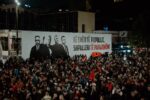
Recent EU reports are described as the harshest in two decades, reflecting growing awareness that student protests, civil society activism, and opposition demands mirror EU reform requirements—while the ruling party actively resists them.
“The demands of Serbian citizens today are identical to EU accession conditions. That alone exposes the regime’s true intentions,” Međak said.
A Country at a Crossroads
Serbia, Međak concludes, stands at a historic crossroads. Continuing down the current path means further isolation, democratic erosion, and mass emigration—primarily to EU countries, ironically the same bloc the regime publicly disparages.
“We have tried every alternative—non-alignment, Russia, China, ‘four pillars.’ Only one path remains untested: genuine European integration. Without political change, we will still be having this same debate in 2050—only with far fewer young people left in Serbia.”