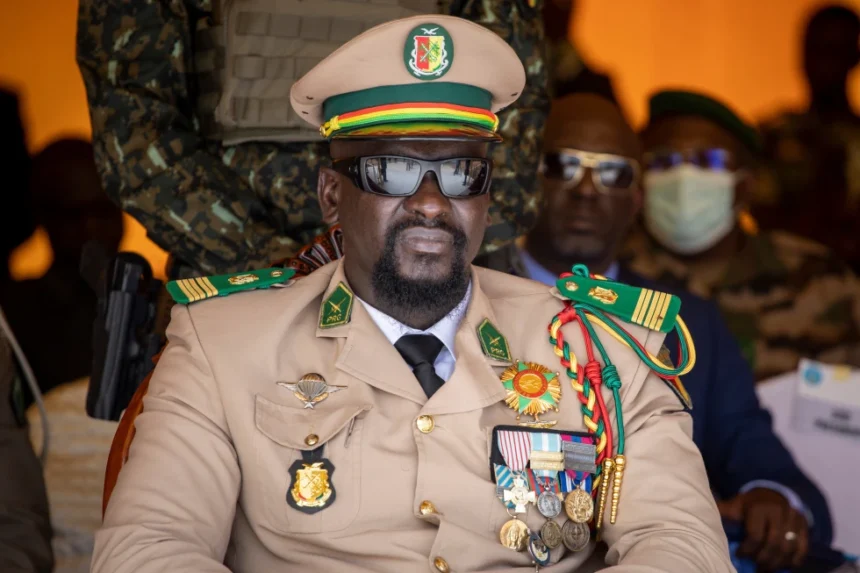
Guineans are voting in the country’s first presidential election since the 2021 military coup, with junta leader Gen. Mamady Doumbouya widely expected to secure victory amid a weakened opposition.
The election concludes a four-year transition process following Doumbouya’s ousting of former President Alpha Condé. Critics say the junta has systematically suppressed opposition and dissent, leaving Doumbouya with little significant competition among the nine candidates on the ballot.
Despite Guinea’s vast mineral wealth, including being the world’s largest exporter of bauxite, over half of the 15 million population suffers from extreme poverty and food insecurity, according to the World Food Program.
“This vote is the hope of young people, especially for us unemployed,” said 18-year-old Idrissa Camara from Conakry, highlighting the economic struggles faced by many Guineans.
The election is conducted under a new constitution that removed the ban on military leaders running for office and extended the presidential term from five to seven years. The constitution was approved in a September referendum, despite opposition parties calling for a boycott.
Analysts warn that the combination of a sidelined opposition, suppressed civil society, and government oversight of the General Directorate of Elections heavily favors Doumbouya. Over 50 political parties were dissolved last year, citing the need to “clean up the political chessboard,” a move widely criticized by rights groups.
Security measures were heightened for the vote, with nearly 12,000 police officers deployed, checkpoints on major roads, and reports of neutralized armed groups in Conakry. Long queues of voters, primarily young citizens, were observed at polling stations across the country.
Doumbouya’s campaign focuses on infrastructure projects and reforms implemented since 2021, including the Simandou iron ore project, a 75% Chinese-owned mega-mining initiative, expected to create tens of thousands of jobs and drive economic diversification in sectors such as agriculture, education, transport, technology, and health.
Opposition candidates face significant challenges: Yero Baldé, Doumbouya’s closest competitor, campaigns on governance and anti-corruption reforms, while major figures like Lansana Kouyaté, Ousmane Kaba, Cellou Dalein Diallo, and Sidya Toure have been excluded or forced into exile.
Approximately 6.7 million registered voters are expected to cast ballots across 24,000 polling stations, with results anticipated within 48 hours. A runoff will occur if no candidate secures a majority.
“This is the third time I’ve voted in Guinea, hoping things will change. But nothing has changed,” said 22-year-old student Issatou Bah, expressing skepticism about the election’s impact on everyday life.
The election reflects broader trends in Africa, where military takeovers have increased in recent years, often under claims of poor governance or insecurity. Observers stress that Guinea’s vote will be a critical indicator of whether the country can transition to a genuinely democratic and inclusive system.