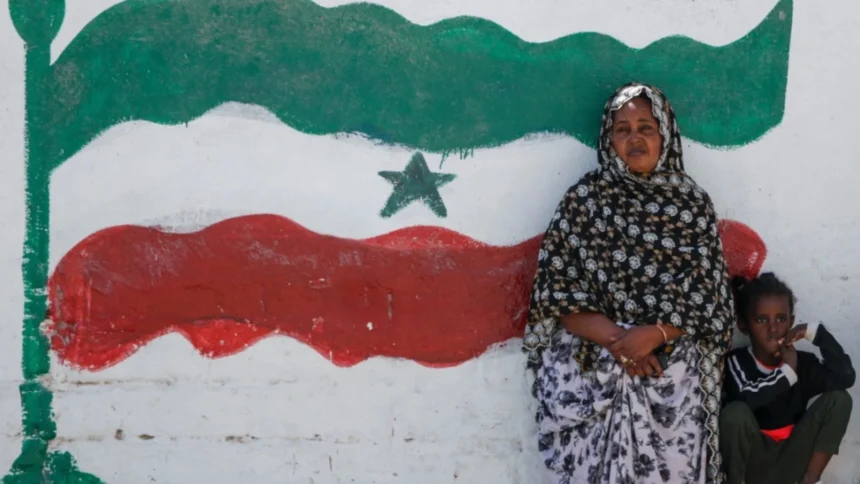
The UN Security Council will hold an urgent meeting on Monday to discuss Israel’s decision to recognize Somaliland, a move that has sparked diplomatic backlash and strong reactions from countries in the region.
The decision prompted an immediate response from 21 Arab and Muslim countries, which issued a joint statement warning that the recognition could have “serious implications for peace and security in the Horn of Africa and the Red Sea region.”
In the statement, the Qatari government described Israel’s move as a “serious violation of international law” and condemned alleged efforts to forcibly displace Palestinians from their lands, linking the recognition of Somaliland to plans affecting Palestinians in the Gaza Strip.
Somaliland unilaterally declared independence in 1991, following the fall of dictator Siad Barre’s regime, and has since operated autonomously with its own currency, army, and police, maintaining a relative stability compared to the rest of Somalia, which continues to face chronic political conflict and attacks from the Islamist group Al-Shabaab.
Despite its autonomy, no country in the international community has formally recognized Somaliland as an independent state, leaving it in political and economic isolation, despite its strategic location at the entrance to the Bab el-Mandeb Strait, one of the world’s key maritime trade routes connecting the Indian Ocean to the Suez Canal.
Analysts warn that Israel’s recognition may escalate regional tensions, affecting relations with Somalia and neighboring countries, especially as Somalia is set to assume the rotating presidency of the UN Security Council.