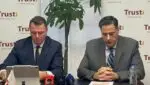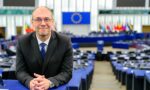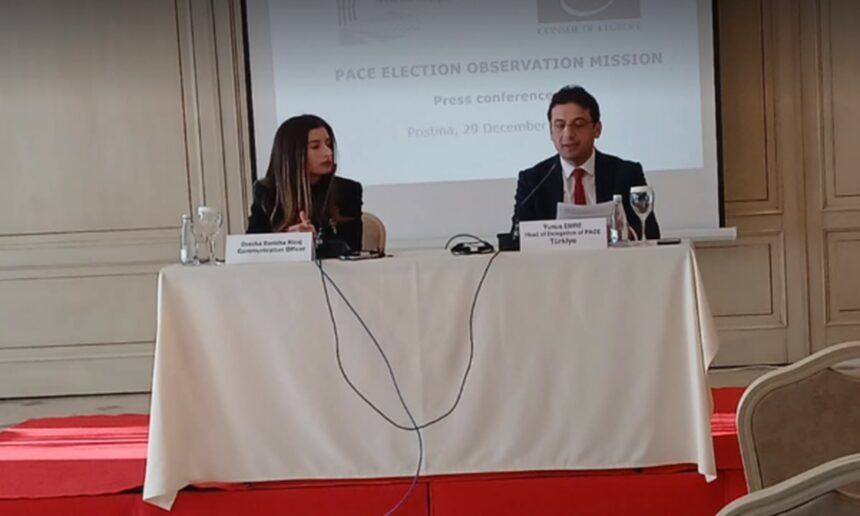
The Head of the delegation of the Parliamentary Assembly of the Council of Europe (PACE), Yunus Emre, stated that Kosovo’s snap elections were conducted in a calm, professional, and generally inclusive manner, despite the short electoral deadlines, Ekonomia Online reports.
Speaking at a press conference following the observation mission, Emre emphasized that the electoral process was marked by the absence of serious incidents and by professional administration in the majority of polling stations.
However, he raised concerns regarding the repeated refusal by the Central Election Commission (CEC) to certify the main Kosovo Serb political party.
“The elections were technically well prepared despite the short deadlines and were generally assessed as inclusive. However, for the fourth time this year, the Central Election Commission refused to certify Kosovo’s main Serb party, Sevskalista, and its list of candidates. This decision was subsequently overturned by the Election Complaints and Appeals Panel and by the Supreme Court. This recurring pattern raised concerns regarding the consistency and impartiality of the electoral administration in the certification process.
Our delegation consisted of twelve members, including six parliamentarians from four PACE political groups and five Council of Europe member states, as well as representatives of the Venice Commission and support staff. On Election Day, PACE teams were deployed across several municipalities, including Prishtina, Mitrovica, Peja, Prizren, and surrounding areas. The full list can be found in our statement.
PACE observers welcome the calm conduct of the snap elections in Kosovo and call on all actors to contribute to the restoration of functional institutions,” Emre said.
The PACE delegation also positively assessed the participation of women in the electoral process and improvements in diaspora voting.
“A delegation of the Parliamentary Assembly of the Council of Europe (PACE) welcomed the calm and professional conduct of the snap elections for the Assembly of Kosovo, expressing hope that all political actors will demonstrate responsibility in restoring functional institutions.
The vote of 28 December marked the fourth electoral process in Kosovo during 2025, following the inconclusive parliamentary elections in February and two rounds of local elections in October and December 2025. These snap elections were triggered by a prolonged political deadlock, including delays in constituting the Assembly, failure to form a government, and the inability to adopt the state budget.
They were held within shortened electoral deadlines, following a brief and low-intensity campaign. Despite a polarized political climate, the PACE delegation noted that most interlocutors welcomed the softer tone of the campaign, the absence of formal complaints regarding hate speech, and the lack of serious incidents—developments considered positive.
In the limited number of polling stations observed, elections were conducted calmly and professionally, with well-trained election officials and a positive atmosphere prevailing in polling stations administered by officials from both majority and non-majority communities.
The need for assistance during voting, including for illiterate voters, was also identified as an issue in several polling stations. These regulations should be reviewed to allow for a more inclusive approach. Unfortunately, in one polling station, the electoral administration did not allow the presence of a PACE observation team during the vote count,” he added.
Emre called on all political actors to demonstrate responsibility in ending the political deadlock and restoring functional institutions.
“The delegation welcomed the active participation of women in the polling stations visited. Although political parties met the formal gender quota requirements, further progress is needed in terms of equal campaign opportunities, media and social media exposure, and realistic chances of being elected.
The delegation also assessed that the legal framework is generally conducive to democratic elections. However, serious gaps remain, particularly with regard to the regulation and oversight of campaign financing. The delegation was also informed of fines considered disproportionate for campaign statements deemed inflammatory or discriminatory, which has sparked debate over balancing freedom of expression with the need to sanction hate speech.
While media coverage was assessed as balanced and in line with regulations, concerns were raised regarding political sponsorship of media outlets and the safety of journalists.
With 2.1 million registered voters in a population of 1.5 million, and with the elections held on a date coinciding with the return of a significant number of diaspora members for the end-of-year holidays, some modalities allowing out-of-country voting at diplomatic missions or by mail were also improved.
These snap elections aimed to bring an end to a political deadlock. The delegation calls on all actors to demonstrate responsibility in restoring functional institutions ahead of the election of the President of Kosovo by the Assembly in spring 2026, and to respect the democratic and Euro-Atlantic aspirations of voters.
The Parliamentary Assembly of the Council of Europe and the Venice Commission remain ready to cooperate in further improving the electoral framework and strengthening the capacities of those responsible for election management,” he concluded.