The United States has pledged $2 billion in humanitarian funding for United Nations (UN) programs, while issuing a stark warning that the organization must “adapt or die,” according to a report by the BBC.
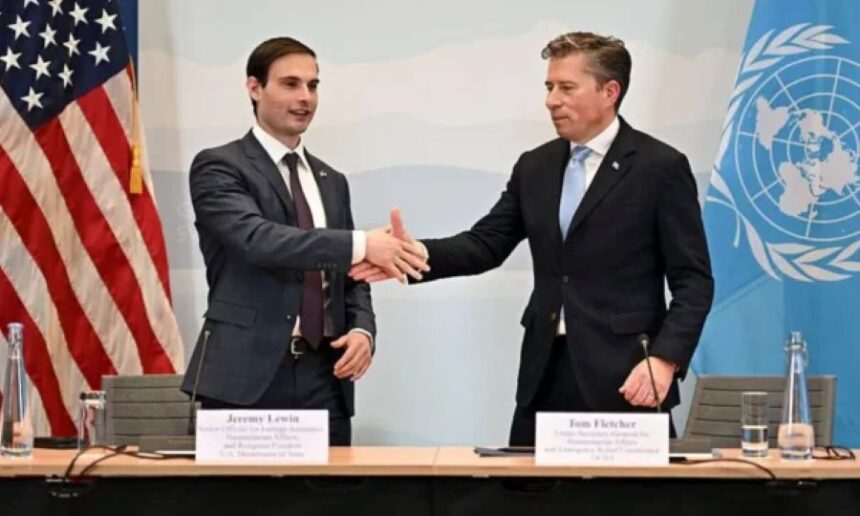
The announcement was made in Geneva by Jeremy Lewin, President Donald Trump’s Under Secretary for Foreign Assistance, alongside UN Emergency Relief Coordinator Tom Fletcher.
The pledge comes amid significant cuts to US humanitarian funding, as well as expected reductions from other major donors, including the United Kingdom and Germany, raising serious concerns about the future of global aid operations.
Mr. Fletcher welcomed the funding, stating it would save “millions of lives.” However, the amount represents only a fraction of previous US contributions. In 2022, the United States provided approximately $17 billion in humanitarian assistance to UN agencies.
Strict Conditions Attached to the Funding
The funding will be restricted to just 17 priority countries, including Haiti, Syria, and Sudan, reflecting a sharp narrowing of US humanitarian engagement.
Afghanistan and Yemen will receive no funding, Mr. Lewin confirmed, alleging that UN aid in Afghanistan had been diverted to the Taliban.
“President Trump will never tolerate a single dollar of taxpayer money going to terrorist groups,” Lewin said.
These limitations pose serious challenges for aid agencies operating in countries excluded from the funding list.
Humanitarian Impact Already Being Felt
The effects of funding cuts are already visible. Maternal and infant health clinics have closed in Afghanistan, while food rations for displaced people in Sudan have been reduced. On a global scale, infant mortality rates—previously declining—are expected to rise this year.
Climate Projects Excluded
The new US funding explicitly excludes projects related to climate change mitigation or adaptation. Mr. Lewin argued that such initiatives are not “life-saving” and do not align with US national interests.