As 2025 comes to an end, Serbia’s ambitious infrastructure plan “Serbia 2025”—unveiled in December 2019 by President Aleksandar Vučić and then-Prime Minister Ana Brnabić—is facing growing criticism over massive cost overruns, missed deadlines, and unfinished projects.
Originally presented as a €14 billion investment vision, official budget data show that between early 2020 and October 2025, nearly €19.8 billion has already been spent on capital projects, exceeding the planned amount by €5.8 billion. With additional spending expected by the end of the year, total costs could reach €21.8 billion, or 56% more than initially promised.
Spending Soars, Results Lag Behind
Despite record expenditures, most flagship infrastructure projects remain unfinished, and some have not even begun. Analysts note that this is the only promise fully delivered: spending far more than announced.
Key examples include:
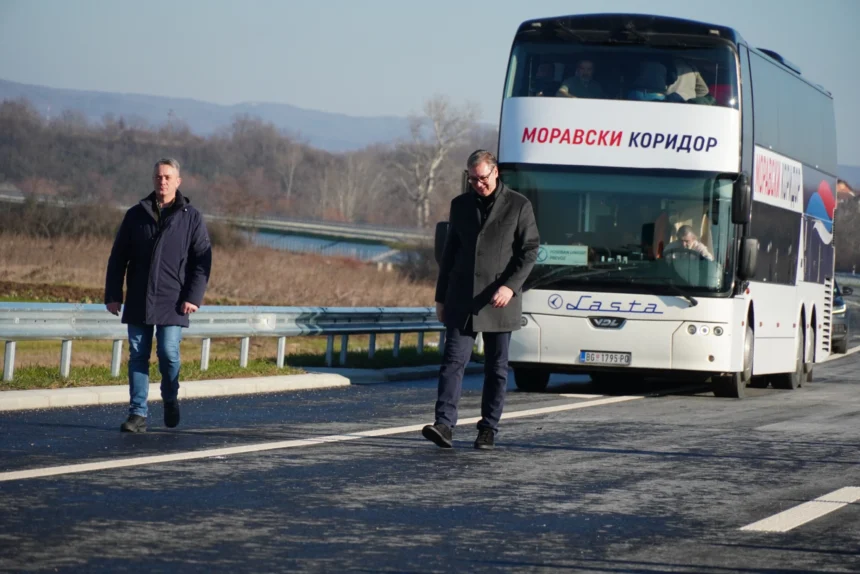
- Morava Corridor:
- Initially promised to be completed by 2023, now expected no earlier than late 2026 or even 2027
- Original contract value: up to €900 million
- Paid so far: €1.85 billion for 72 km
- Final cost projected to exceed €2.2 billion, making each kilometer 3.2 times more expensive than agreed
- Preljina–Požega section of the “Miloš Veliki” highway:
- Each kilometer cost nearly €31 million, among the most expensive in Europe
- Final bill already exceeds €950 million, double the original estimate
- Belgrade Metro:
- Promised investment: €1.7 billion
- Spent so far: just €115 million, with funds redirected elsewhere
Railway Projects and Safety Concerns
The Belgrade–Subotica railway has also raised serious concerns, especially after the collapse of a station canopy in Novi Sad in November 2024, which killed 16 people. Despite official claims that works were complete, tens of millions of euros continued to be paid afterward, suggesting the line was opened before construction had fully finished.
Total spending on rail infrastructure has reached over €2.4 billion, with costs far exceeding original projections.
Projects That Exist Only on Paper
Several heavily promoted projects remain stalled or abandoned:
- “Vožd Karađorđe” expressway – declared a project of special importance, yet no construction has begun
- Belgrade–Zrenjanin–Novi Sad highway – costs ballooned from €200 million to €1.6 billion, while completion before 2030 appears unlikely
Debt-Fueled Growth
A significant portion of these projects is financed through foreign loans, meaning repayment burdens will fall on citizens for decades. Critics warn that Serbia’s infrastructure boom has focused more on rising prices than completed kilometers.
Conclusion
The assessment of “Serbia 2025” reveals a pattern of grand announcements, escalating costs, delayed deadlines, and limited accountability. While spending has broken records, results remain largely symbolic, raising serious questions about transparency, efficiency, and long-term fiscal sustainability.