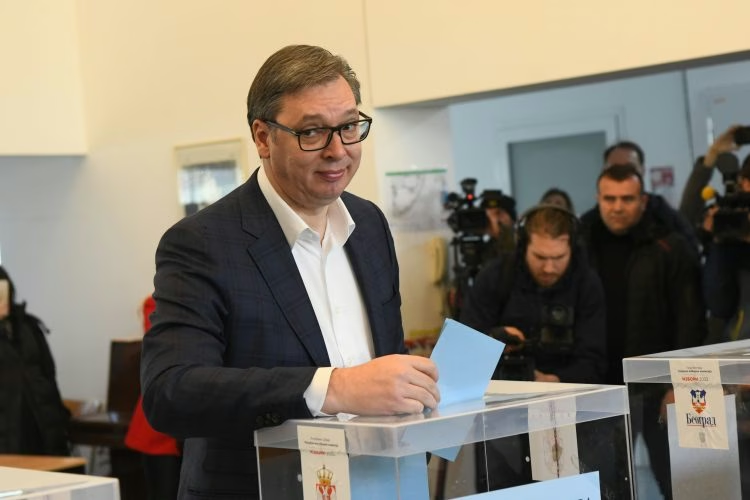
A segment of Serbian citizens hopes for a change of government in the new year, but whether elections will be held—and when—depends largely on President Aleksandar Vučić, analysts and opposition figures say.
Vučić began his second five-year presidential term in 2022. A third term would require constitutional changes, which he has publicly ruled out. However, he has not excluded a return to the post of prime minister, saying a decision could be made within the next six months.
“Yes, I could become prime minister, but that requires public support and my own decision—and neither is easy for me. I’m somewhat tired and exhausted, and I would like someone else to do the job in the future,” Vučić said on December 9, 2025.
Despite these remarks, Vučić remains without real competition within his party. Since he cannot simultaneously run for both president and prime minister, speculation has intensified about the possibility of snap parliamentary elections accompanied by early presidential elections—though few believe this will happen in 2026.
Opposition: Elections Are Being Delayed Due to Declining Support
Political analyst Dragomir Anđelković argues that Vučić is deliberately postponing elections, aware that public trust in electoral fairness has eroded.
“If he believed he could easily win, elections would already be scheduled. He knows that manipulating future elections would trigger massive protests, which is why he keeps delaying. It is questionable whether elections will even be held in 2026,” Anđelković said.
Vučić, however, claimed on January 1, 2026, that students would stand no chance if elections were held immediately.
“If elections were held today, they would not win. Whether that will still be the case in nine or ten months is another matter—we’ll see. Slowly and carefully,” he said.
Falling Poll Numbers Raise Concerns for the Ruling Coalition
The President of the Freedom and Justice Party (SSP), Dragan Đilas, pointed to recent local election results as evidence of a significant decline in support for the ruling coalition.
“In Negotin, they dropped from over 75% to 67%, which translates nationally from 46% to below 40%. That is not a minor decline—it is substantial. If elections were held tomorrow, Vučić and the Socialist Party of Serbia would not be able to form a government,” Đilas stated.
Calls for a United Opposition and Student Movement
Miroslav Aleksić, leader of the People’s Movement of Serbia, believes the ruling bloc would have no chance in a referendum-style election, achievable only through a joint list of opposition parties and student movements.
Đilas echoed this view, stating he is willing to step aside from any future electoral list for the sake of unity.
“If my name is the problem, I will not be on the list. I am in politics to change things—that is why I returned,” he said.
Concerns Over Acceptance of Election Results
Đilas concluded by warning that Vučić would not accept an electoral defeat, drawing parallels with Slobodan Milošević, and predicting that citizens would take to the streets to defend an opposition victory.