The recent overnight capture of Venezuelan President Nicolás Maduro by U.S. forces has sent shockwaves through China, destabilizing decades of carefully cultivated relations between Beijing and Caracas.
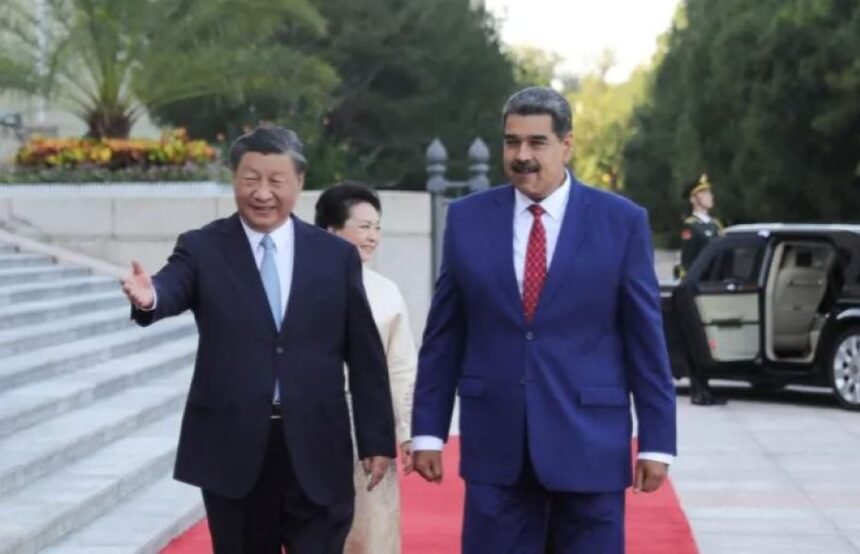
Just hours before the raid, Maduro praised Chinese President Xi Jinping as his “big brother” and lauded his leadership during a meeting with senior Chinese diplomats. State media highlighted the visit, showing smiling officials reviewing agreements, while the subsequent capture of Maduro painted a starkly contrasting image: the Venezuelan leader in casual sportswear, hands bound, aboard a U.S. military vessel.
China Condemns the Action
Beijing, alongside many other nations, strongly condemned the U.S. operation, accusing Washington of acting as a “world judge” and insisting that the sovereignty and security of all nations must be fully protected under international law.
Despite this, Chinese officials are reportedly calculating their next moves carefully, weighing their strategic interests in South America against maintaining an already complex relationship with the Trump administration.
Strategic and Economic Implications
China has invested heavily in Venezuela, spending over $100 billion from 2000 to 2023 on infrastructure projects in exchange for crude oil shipments. Approximately 80% of Venezuela’s oil exports last year went to China, though this represents just 4% of the country’s total oil imports.
Experts warn that Chinese state-owned companies such as CNPC and Sinopec could face losses or asset nationalizations, while Venezuela still owes roughly $10 billion in unpaid debts to Chinese creditors. Eric Olander, editor of the Global South–China Project, emphasized that future investors must carefully assess the risks posed by potential U.S. interventions.
Geopolitical Consequences
The incident also raises questions about China’s long-term plans in the Western Hemisphere. Analysts note parallels with Taiwan, as the capture challenges Beijing’s assumptions about U.S. restraint in its regional backyard. David Sacks of the Council on Foreign Relations stressed that any military action against Taiwan would not be dictated by Maduro’s capture, though the event heightens strategic uncertainty.
Secretary of State Marco Rubio underscored U.S. resolve, stating that the Western Hemisphere must remain free from influence by adversaries or competitors, implicitly sending a message to Beijing.
Global South and Regional Stability
China has historically leveraged its influence across Latin America, securing diplomatic recognition and strategic partnerships with countries including Costa Rica, Panama, the Dominican Republic, El Salvador, Nicaragua, and Honduras. The Maduro operation, however, threatens to disrupt these carefully built networks, potentially undermining Beijing’s economic and political gains in the region.
Eric Olander concluded:
“The situation in Venezuela could easily descend into chaos. China’s careful balance in the region is now at risk, and future investment and strategic planning will need to account for unprecedented U.S. actions.”
The episode underscores the fragile and unpredictable nature of U.S.–China rivalry in Latin America, with far-reaching consequences for energy, trade, and geopolitical influence in the Global South.