The United States has escalated its efforts to control Venezuelan oil following the ouster of President Nicolás Maduro in a surprise operation, seizing two sanctioned tankers and announcing plans to relax select sanctions to oversee the global sale of Venezuelan petroleum.
Tanker Seizures
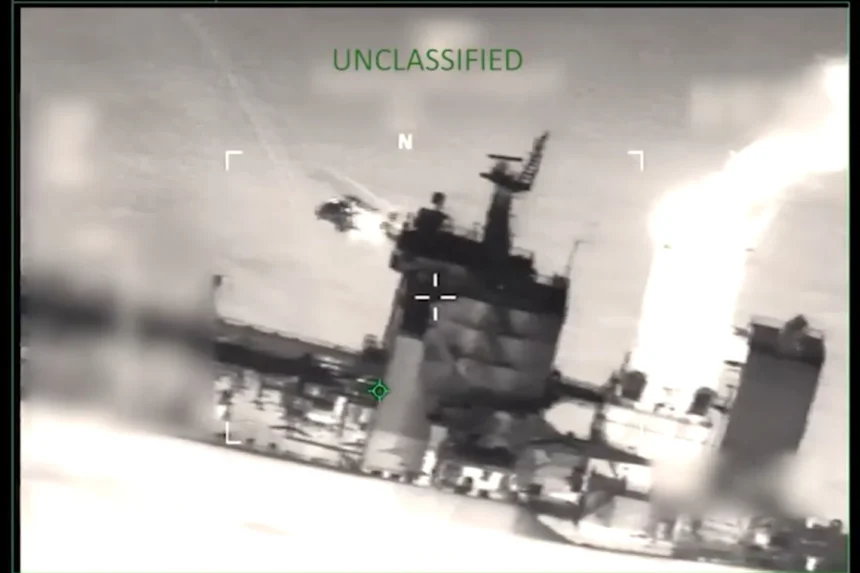
- MV Bella 1, pursued across the North Atlantic after attempting to evade a U.S. blockade, was seized for violating U.S. sanctions. The vessel had briefly flown a Russian flag to evade capture.
- M/T Sophia, operating in the Caribbean, was also taken by U.S. forces. Both ships are part of what officials describe as a “shadow fleet” transporting oil for sanctioned countries, including Venezuela, Russia, and Iran.
- These join at least two other tankers seized last month: the Skipper and the Centuries.
The U.S. Department of Justice is investigating crew members for failing to comply with Coast Guard orders, warning that criminal charges will be pursued against those responsible.
Strategic Control of Venezuelan Oil
The Trump administration plans to dictate where Venezuelan oil is sold, aiming to leverage the country’s energy resources to influence global oil markets. Vice President JD Vance stated the U.S. can “control Venezuela’s purse strings” and exert economic pressure without risking American lives.
Secretary of State Marco Rubio confirmed that oil from the seized vessels could be sold under U.S.-supervised agreements, with up to 50 million barrels expected to be distributed to U.S. and Venezuelan markets. All proceeds will be held in U.S.-controlled accounts at globally recognized banks.
The Energy Department indicated that the sale of Venezuelan oil will continue indefinitely, with Venezuelan state oil company PDVSA negotiating terms under commercial agreements akin to those with international firms such as Chevron.
Implications for Global Energy and Sanctions
- The Bella 1 and M Sophia were reportedly part of fleets smuggling oil to evade sanctions. Both vessels were tracked with satellite imagery and maritime intelligence.
- The capture of these tankers also involved international cooperation, with the U.K. providing surveillance support. U.K. Defense Secretary John Healey described the fleet as part of a Russian-Iranian sanctions-evasion network fueling global conflict.
- The U.S. will authorize imports of oil field equipment and services to boost Venezuelan production, currently around 1 million barrels per day, while investing in the electricity grid and infrastructure to stabilize the economy.
Venezuelan Response
Acting President Delcy Rodríguez described the developments as “neither extraordinary nor irregular”, emphasizing Venezuela’s intention to maintain trade relations with countries worldwide, including the Americas, Europe, Asia, Africa, and the Middle East.
Analysts note that these moves give the Trump administration unprecedented leverage over Venezuela’s oil exports, enabling it to shape both regional and global energy markets while asserting influence over the interim Venezuelan authorities.