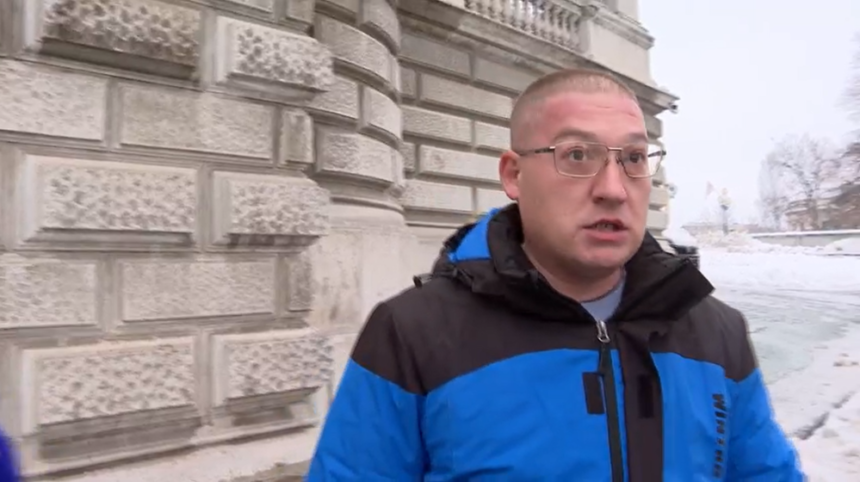
Miroslav Suvalj, the man who recently blocked a TV N1 crew from entering Pioneer Park in central Belgrade, has a long criminal record and has emerged as a controversial figure associated with the pro‑government encampment known as “Ćacilend.” Public and political reactions have underscored his connection to the ruling Serbian Progressive Party (SNS) and President Aleksandar Vučić’s rhetoric.
Long Criminal Record Documented by Court
According to court information released in response to public records requests, Suvalj — from Sombor, Serbia — is a multiple offender who has served prison sentences totaling more than a decade for serious crimes.
- In January 2014, the Higher Court in Sombor sentenced him to 2 years and 2 months for robbery and attempted robbery committed in complicity with others.
- In May 2014, he received a combined sentence of 8 years and 6 months for kidnapping, rape, and extortion, also committed in complicity.
His total punishments reflect convictions for violent and predatory crimes under Serbia’s Criminal Code.
Role at Ćacilend Encampment
Suvalj appeared on video this week as part of a group blocking access to the camp known as Ćacilend, an encampment set up in Pionirski Park by supporters of the Serbian Progressive Party (SNS). This camp has remained in place for months, surrounded by security fencing and guarded by people claiming to be private security, with police present nearby.
Opposition figures have sharply criticized the situation, framing Suvalj’s presence as symbolic of how the camp has been tolerated by state authorities. Mila Popović, head of the Belgrade board of the opposition Party of Freedom and Justice (SSP), highlighted Suvalj’s convictions, including for rape, while criticizing the government for protecting the encampment.
“When Aleksandar Vučić says that Ćacilend is a ‘seed of freedom,’ he means the free exploitation of criminals against citizens,” Popović wrote on social media.
Opposition politicians have repeatedly denounced the camp as a gathering of SNS loyalists and supporters deployed to counter ongoing anti‑government protests, often with minimal repercussions from law enforcement. Critics argue that such figures have been allowed to operate with impunity because of their perceived loyalty to Vučić and the ruling party’s narrative.
Political Context
President Aleksandar Vučić and SNS officials have defended the presence of the camp in public remarks, calling it a symbol of resistance or “freedom,” and portraying its supporters as defenders of stability. Vučić has repeatedly framed disputes around the camp and related protests in terms of a battle between “patriots” and those seeking to destabilize the country.
Meanwhile, opposition parties argue that the government’s tolerance of individuals with violent criminal records in key public spaces undermines the rule of law and emboldens fringe elements. They say the camp’s continued existence has been used politically to contrast pro‑government supporters with broader civic protests calling for democratic reforms.