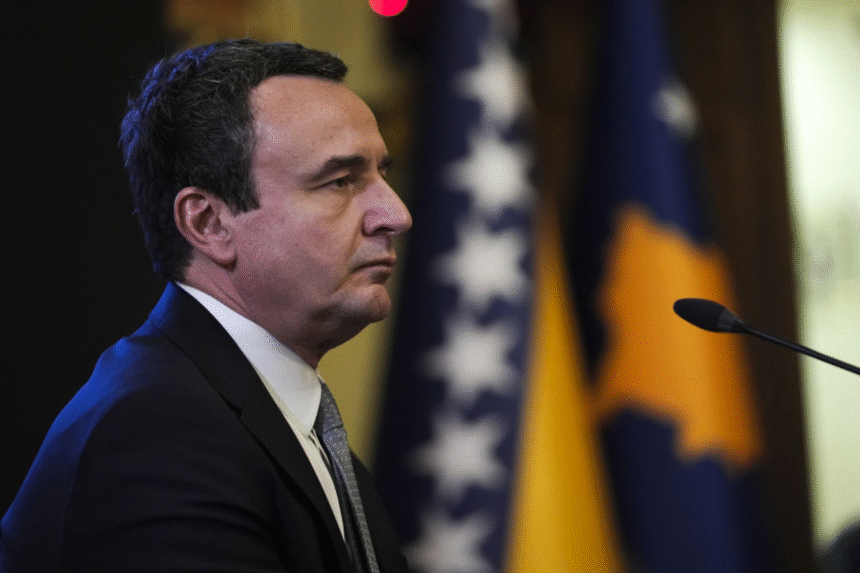
Kosovo Prime Minister Albin Kurti has commemorated Rexhep Malaj and Nuhi Berisha on the 42nd anniversary of their heroic fall, highlighting their armed resistance, political activism, and ultimate sacrifice for the freedom of Kosovo.
Kurti recalled their national and political engagement, their life in illegal underground resistance, and their armed confrontation with Yugoslav police, emphasizing that their deaths became a symbol of resistance and inspiration for generations who later fought for freedom.
According to Kurti, on January 11, 1984, during a cold winter night, Rexhep Malaj and Nuhi Berisha were killed while resisting Yugoslav police forces in the Vranjec neighborhood of Prishtina (now Kodra e Trimave). After being surrounded in a house where they were hiding, the two activists refused to surrender and resisted with weapons, ultimately losing their lives after midnight.
Their armed resistance until self-sacrifice, Kurti stressed, was experienced by fellow activists and the Albanian population as an ideal example of courage and unwavering commitment, at a time when Kosovo was under Serbian rule within Yugoslavia.
Rexhep Malaj was a leading member of the underground Movement for the Albanian Republic in Yugoslavia (LRSHJ). His political engagement began early, as he was expelled from high school and imprisoned for organizing the 1968 demonstrations in Gjilan. Born on March 29, 1951, in Hogosht, Kamenica, Malaj later worked as a teacher while studying economics at the University of Prishtina. He spent nine years in Yugoslav prisons, including facilities in Prishtina, Mitrovica, Zenica, Štip, Idrizovo, Prizren, Foča, and Mostar, following a major political trial in which Adem Demaçi was also sentenced.
Nuhi Berisha, born on October 3, 1961, in Svircë, Kamenica, studied law and physical education at the University of Prishtina. As a student, he joined the Revolutionary Group and actively participated in organizing the 1981 student demonstrations. He later continued his political activism in exile in Switzerland, returning to Kosovo in June 1983.
Kurti also referenced the illegal press of the time, including the newspaper “Zëri i Kosovës”, which in February 1984 reported their deaths under the headline “Heroic Resistance in Prishtina”, featuring their portraits on the front page.
To better understand their political thought and legacy, Kurti encouraged reading their written works: Rexhep Malaj’s prison diary “Qëndresa (Resistance)” and Nuhi Berisha’s memoir “Pranverë e Luleve të Kuqe (Spring of Red Flowers)”, both of which document the resilience of Albanian resistance under Yugoslav oppression.
“Glory to Rexhep Malaj and Nuhi Berisha, on the 42nd anniversary of their sacrifice for the freedom of Kosovo,” Kurti concluded.