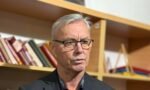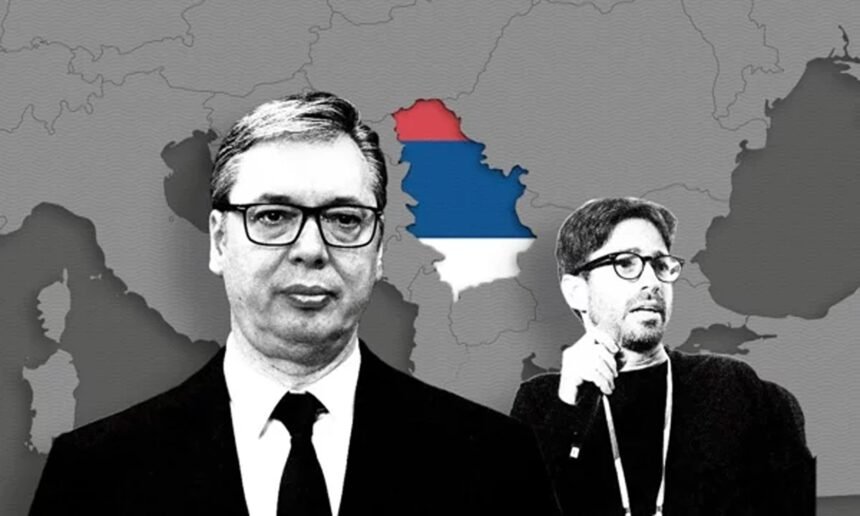
Israeli police have issued an arrest warrant for Srulik Einhorn, a former adviser to Serbian President Aleksandar Vučić, who is suspected of involvement in the so-called “Qatargate” affair. According to Israeli authorities, Einhorn is accused of receiving payments to conduct a propaganda campaign aimed at improving Qatar’s image on the international stage.
The information was confirmed by Israeli security journalist Yossi Melman, who told N1 Belgrade that Einhorn is currently considered a fugitive from justice.
“He is refusing to return to Israel and face the investigation, as new evidence has recently emerged against him,” Melman said.
According to Melman, Israeli police had sent investigators to Belgrade several months ago, where Einhorn was questioned in the presence of Serbian police. At that time, he denied any involvement and claimed that his actions were lawful, which resulted in the investigation failing to produce concrete outcomes at that stage.
The situation changed several weeks ago, when Israeli authorities decided to officially declare him wanted, citing his lack of cooperation and the emergence of new evidence.
Einhorn is suspected of having worked for Qatar ahead of the 2022 World Cup, attempting to portray the country as open, hospitable, and tolerant, including toward Jewish communities. However, the allegations go further.
According to Melman, Einhorn was also involved in manipulating Israeli media by deliberately spreading narratives that portrayed Egypt as an enemy of Israel, while presenting Qatar as an acceptable partner. This reportedly caused serious concern within Israel’s military and security establishment, given that Egypt is a strategic ally of Israel.
“This is not merely a procedural violation. This is espionage on behalf of a foreign state and a deliberate attempt to create chaos,” Melman emphasized.
Meanwhile, the Einhorn case raises serious questions about his role as a former adviser to the Serbian president, as well as about the influence of foreign actors on political processes and media campaigns in the Balkans.