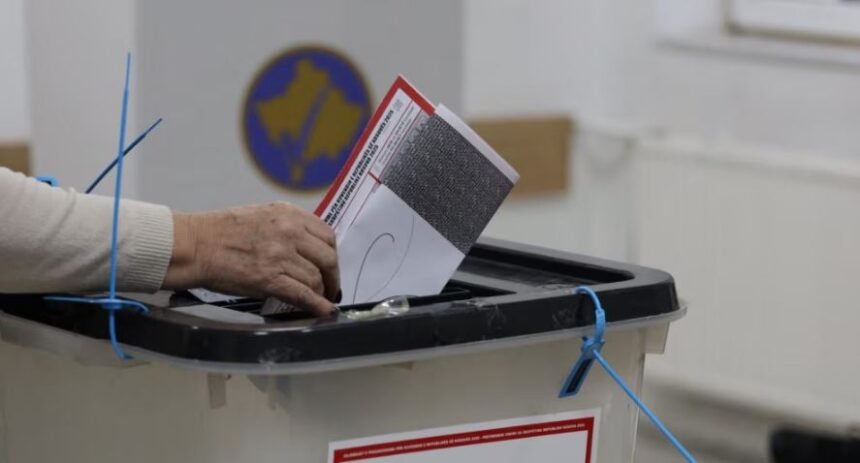
Concerns over vote manipulation, particularly within political parties, and complaints from parliamentary candidates have persisted for years in Kosovo.
Recently, the Central Election Commission (CEC) decided to recount votes in one-third of polling stations from the early parliamentary elections held on 28 December, raising worries about the integrity of the electoral process.
The partial recount also risks further delaying the formation of new institutions and could affect the composition of Kosovo’s 120-seat Assembly, experts warn.
Why the recount is happening
The CEC began the recount on 13 January in 914 out of 2,557 polling stations, after detecting inconsistencies in the vote counts for individual candidates.
“The votes for candidates, counted at Municipal Counting Centers, did not match the votes recorded on the ballot papers,” the CEC stated.
A full recount will take place in 10 municipalities, while in 28 other municipalities, only 10% of polling stations will undergo recounting over the next two weeks.
CEC spokesperson Valmir Elezi told Radio Free Europe/Radio Liberty that the decision aims to ensure the accuracy and integrity of the electoral process.
However, Eugen Cakolli from the Kosovo Democratic Institute stated that CEC investigations revealed serious irregularities, suggesting deliberate manipulation by certain counting commissioners. In some polling stations, differences of hundreds or even thousands of votes have been found.
“For example, in one Prizren polling station, after verification by the CEC, a candidate was found to have 107 votes added in the municipal counting center that they did not actually receive,” Cakolli explained.
NGO Çohu highlighted that such discrepancies are not uncommon in Kosovo, often resulting from impunity for those who manipulate the electoral process.
How votes are counted and where mistakes occur
CEC-appointed counting teams are nominated by political parties. If parties fail to nominate sufficient members, CEC staff fill the gaps.
Each municipal counting center has tables with cameras above to record each ballot, which is displayed on a screen for observers. Counters read ballots aloud while another official enters the votes into an electronic system.
Despite these measures, Cakolli notes that detailed verification is still lacking, as observers cannot access the original ballots, and monitoring during the recent elections was minimal due to the holiday season.
Potential consequences
The recount could change the composition of the Assembly, particularly affecting candidates with a narrow margin of votes. It may also delay the formation of new institutions, at a time when Kosovo must finalize financial agreements and elect a president before Vjosa Osmani’s term ends in April.
While the CEC’s decision to recount 36% of polling stations is positive, Cakolli considers it insufficient and calls for a full recount to ensure electoral integrity and prevent further delays.
Elezi stated that if the recount reveals possible manipulation within political parties, the CEC will refer the matter to the relevant authorities.
Cakolli stressed that the Prosecutor’s Office should immediately investigate all suspected commissioners involved in potential manipulation, to ensure accountability and deterrence. Çohu also demanded a full, independent investigation into any irregularities or violations of voters’ rights.
“Any suspicion of manipulation of voters’ will must be treated with the utmost seriousness and without delay,” the NGO emphasized.