The Kosovo Security Force (KSF) continues to strengthen its military capabilities, most recently through the delivery of OMTAS anti-tank missile systems from Turkey. According to security experts, this development contributes to stability and security in the Western Balkans and represents an important step in Kosovo’s path toward membership in NATO.
The Ministry of Defense has meanwhile confirmed that additional strategic procurements are expected, particularly in the field of air defense, as Kosovo seeks to meet the objectives and standards required for integration into the North Atlantic Alliance.
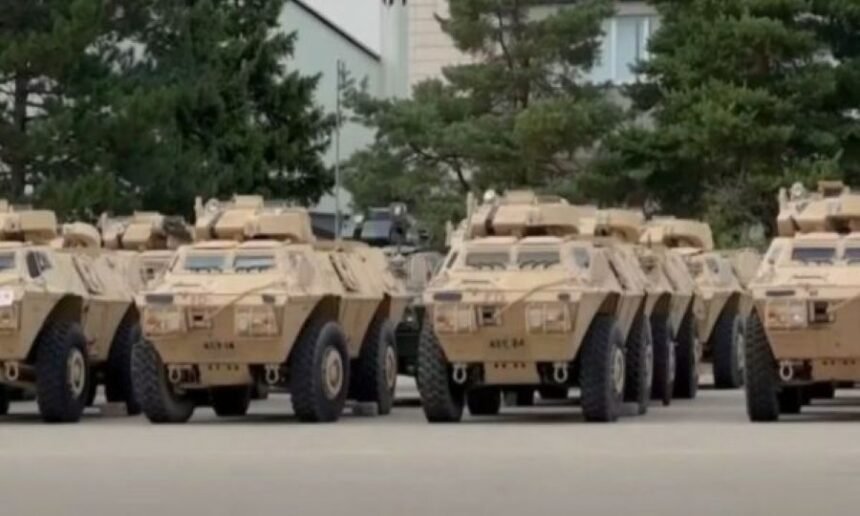
Over the past year, the Kosovo Security Force has been equipped with armored vehicles and unmanned aerial systems (drones). During the current year, further enhancements are expected, including advanced missile systems from powerful allied states.
The latest addition to the KSF arsenal is a new batch of OMTAS anti-tank missile systems, supplied by Turkey, a NATO member state. This acquisition is widely seen as a significant boost to operational flexibility and defense capabilities of Kosovo’s armed forces.
Security analysts stress that the arming of the KSF does not represent a threat, as claimed by Serbia. On the contrary, they argue that it supports the professional development of Kosovo’s military and contributes to regional security in the Western Balkans.
“The KSF is progressing in line with its development plan and has entered the third phase of transition,” said Nuredin Ibishi, a security expert. “The dynamics of capacity-building, investments in armament, training, and infrastructure are fundamentally different from Serbia’s tendencies to create insecurity through hybrid threats against Kosovo.”
Another security analyst, Arben Dashevci, emphasized that Kosovo’s goal is to complete its military development by 2028, aligning with NATO standards.
“They are completing security capacities for full operational capability by 2028, which is also the objective of the Republic of Kosovo and the KSF—to join NATO and resolve security challenges once and for all,” Dashevci said.
In addition to current acquisitions, Acting Minister of Defense Ejup Maqedonci confirmed that Kosovo is entering a new phase of procurement focused on strategic systems, particularly air defense, sourced from NATO member countries.
“We have now moved into a new stage with procurements that will be primarily strategic, including air defense,” Maqedonci stated.
The Ministry of Defense underlined that these developments reflect Kosovo’s commitment to NATO integration and its efforts to meet the alliance’s security standards, reinforcing the country’s role as a factor of stability in the region.