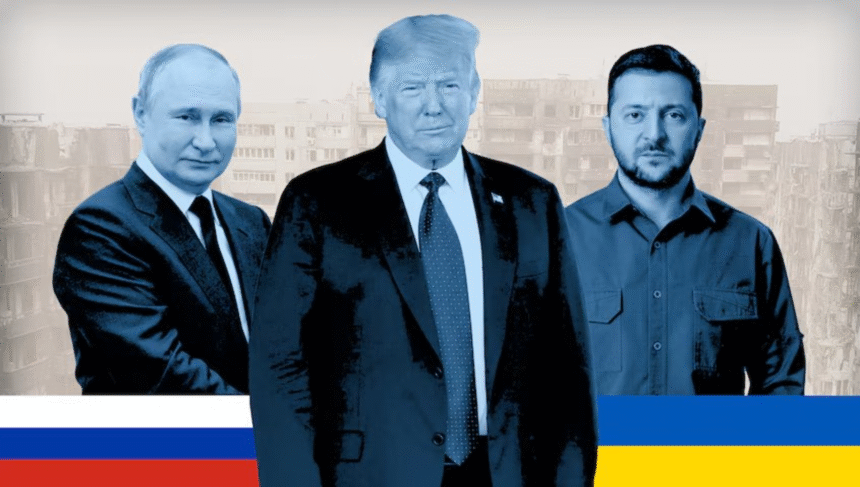
U.S. President Donald Trump stated in an exclusive interview with Reuters that Ukraine, not Russia, is hindering a potential peace agreement—a view that contrasts with European allies, who continue to assert that Moscow has little interest in ending the war in Ukraine.
Speaking from the Oval Office, Trump expressed the belief that Russian President Vladimir Putin is ready to end the four-year conflict, while suggesting that Ukrainian President Volodymyr Zelensky is less willing to compromise.
“I think he [Putin] is ready to make a deal. I think Ukraine is less ready to make a deal,” Trump said.
Asked why U.S.-led negotiations had not resolved Europe’s largest ground conflict since World War II, he replied: “Zelensky.”
The comments reflect renewed frustration with the Ukrainian leader, despite the fact that interactions between the two presidents improved during Trump’s first year back in office. Trump has at times been more willing to accept Putin’s guarantees at face value than some U.S. allies, frustrating Kyiv, European capitals, and even some American lawmakers, including Republicans.
Intelligence reports from December, however, warned that Putin had not abandoned his goals of controlling all of Ukraine and reclaiming parts of Europe formerly under the Soviet Union, though National Intelligence Director Tulsi Gabbard contested that assessment at the time.
U.S.-led negotiations in recent weeks have focused on security guarantees for a post-war Ukraine, aiming to ensure Russia does not re-invade after a potential peace deal. In practice, U.S. negotiators have pushed Ukraine to consider relinquishing the eastern Donbas region as part of any agreement with Russia.
Ukrainian officials have been heavily involved in the talks, led by Special Envoy Steve Witkoff and Jared Kushner, Trump’s son-in-law. Some European officials, however, express doubts that Putin would agree to recently proposed conditions negotiated by Kyiv, Washington, and European leaders.