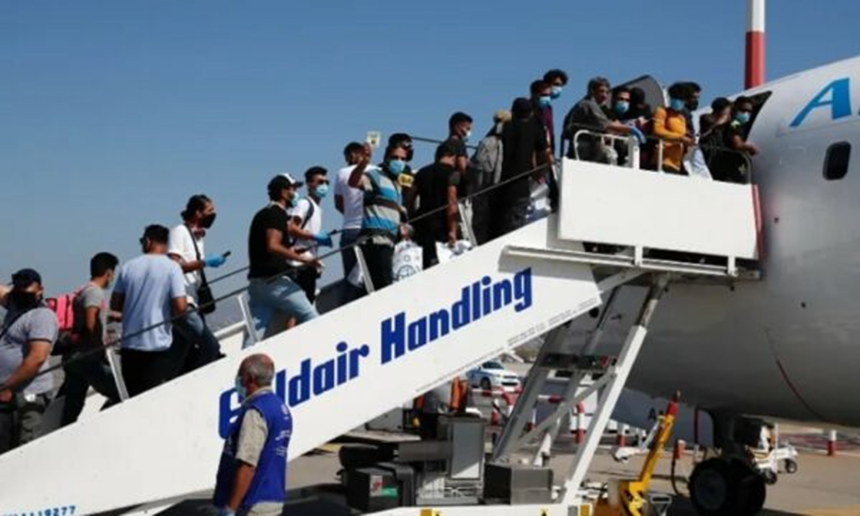
According to the latest Eurostat data, an increasing number of migrants in the European Union are being returned to their countries of origin or transferred to other destinations.
In the third quarter of 2025, nearly 42,000 non-EU nationals were returned by EU member states. This represents a 19% increase compared to the same period in 2024, when approximately 35,000 returns were carried out.
The vast majority (82%) were returned outside the European Union, while about 18% were transferred to other EU member states.
Among EU countries, Germany has significantly expanded its operations. Over the past year, Berlin has tripled the number of returns, reaching almost 12,000 in the third quarter of 2025—far surpassing France, which recorded nearly 5,000, and all other EU countries.
Belgium has followed a similar trend, with returns of non-EU nationals nearly doubling, from 730 in Q3 2024 to 1,210 in Q3 2025.
Which Nationalities Are Being Returned Most Frequently?
The highest number of returns across the EU in Q3 2025 involved Algerian nationals (12,325) and Moroccan nationals (6,670).
Compared to the previous quarter, the largest increases were recorded among:
- Turkish nationals (+15%)
- Syrian nationals (+9%)
- Russian nationals (+7%)
- Georgian nationals (+5%)
- Albanian nationals (+2%)
Eurostat reports that 40% of all returns were classified as “forced”, meaning that a significant share of individuals subject to return orders did not leave voluntarily but were compelled to do so.
However, these figures vary widely between EU member states.
Denmark recorded the highest share of forced returns (91%), followed by Romania (82%) and Bulgaria (80%).
Italy reported a rate of 100%, although such a rounded figure may reflect differences in reporting practices rather than actual procedures, given the fragmented nature of return systems across the EU.
According to Eurostat, approximately 77% of all returns involved some form of financial assistance, such as help with travel tickets or cash payments upon departure or arrival.
Why Are So Few Return Orders Enforced?
There is a significant gap between the number of return orders issued by EU member states and those actually carried out: 41,890 returns, or about 36% of the total.
France, for example, issued the highest number of return orders—nearly 34,000 in Q3 2025—but enforced only 14% of them, a rate similar to Greece (14%) and Spain (13%).
This gap is explained by several factors.
In some cases, authorities are unable to determine the migrant’s country of origin. In others, returns are delayed or suspended for health reasons, or because the individual is an unaccompanied minor.
In early December, EU countries approved draft legislation aimed at speeding up returns. Under the new framework, member states will be allowed to sign bilateral agreements with third countries to establish reception centers for migrants outside the EU.
These centers would host migrants while their applications are reviewed and their status verified.
However, human rights organizations warn that relocating such centers outside EU territory could lead to unlawful returns and arbitrary detention.