The European Commission is urging heavy industry leaders to publicly support a “Made in Europe” manufacturing component in upcoming EU legislation, according to a leaked letter seen by Euronews. The move comes just days before the expected presentation of the Industrial Accelerator Act (IAA).
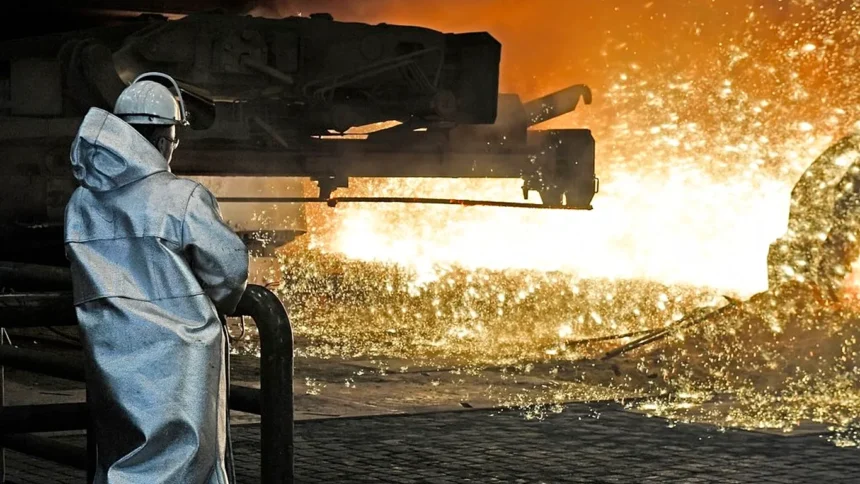
The initiative, led by France, seeks to increase the share of European industrial production and revive struggling sectors such as steel, aluminium, cement, and clean technology manufacturing, which are facing intense competition from China and the United States.
Industrial Sovereignty at Stake
In the letter, European Commission Executive Vice-President Stéphane Séjourné warns that Europe is entering an era of power-based economic relations, marked by tariffs, large-scale subsidies, export restrictions and unfair competition.
“Europe faces a clear choice: either adopt an ambitious and pragmatic industrial policy, or accept the gradual erosion of its industrial base, know-how and economic sovereignty,” Séjourné wrote.
The Commission is asking business leaders to “support and sign” the initiative, stressing that European public funds should primarily benefit European production.
Industrial Accelerator Act: Goals and Scope
The Industrial Accelerator Act aims to:
- Decarbonise energy-intensive industries
- Strengthen EU competitiveness
- Create stable demand for low-carbon products, such as green steel and hydrogen
A similar law adopted in 2024 prioritised EU-based clean technology production to support the bloc’s 2050 climate neutrality goal.
Proposed Production Thresholds
While no final figures have been agreed, EU officials have discussed “Made in Europe” production quotas ranging from 60% to 80%. Importantly, output from non-European companies manufacturing inside the EU could still qualify as “Made in Europe”.
The Commission is also exploring ways to:
- Link EU funding to domestic production
- Use the EU’s long-term budget (MFF) and Competitiveness Fund
- Ease state-aid rules, potentially allowing member states to fund decarbonisation projects without prior Commission approval
Concerns from Member States
A group of nine EU countries, including Sweden, Ireland, Finland, Portugal and the Netherlands, have warned that the law could:
- Distort competition within the EU single market
- Increase prices
- Disadvantage smaller or less industrialised economies
Poland and the Netherlands are calling for a full impact assessment before adoption.
Industry Support Growing
European industry leaders appear supportive, citing a record €350 billion trade deficit with China in 2025. In a separate letter, business leaders described the IAA as “an act of economic independence”, echoing warnings from former ECB President Mario Draghi, who cautioned that Europe risks “slow agony” if it fails to close the competitiveness gap.
“China has ‘Made in China’, the U.S. has ‘Buy American’. Why shouldn’t Europe protect its strategic industries?” the letter states.
Industry representatives are calling for financial support through public auctions, direct state aid, or other funding mechanisms to support increased production.
Next Steps
After being postponed in December, the Industrial Accelerator Act is expected to be presented on January 29, although further delays remain possible.